 EN
EN
Quick Links
The MDVR does not replace NEMT dispatch software. Dispatch systems typically manage passengers, trip assignments, appointment information and service status, while the MDVR focuses on vehicle video, GPS, timestamps and operational evidence. Integration can be considered when compatible APIs or protocols are available.
Non-emergency medical transportation includes different operating models: sedans, wheelchair-accessible vans, paratransit vehicles, subcontracted providers and broker-managed fleets. Their common requirement is not simply to record passengers. The system should help operators improve driving and passenger safety, review pickup and drop-off-related events, track vehicle location and investigate service complaints or incidents.
CMS describes NEMT as an important benefit for people who need assistance traveling to and from medical appointments. It also emphasizes program efficiency, economy, quality of care and provider and driver requirements. A camera system can support fleet operations, safety review and trip documentation, but it does not replace the dispatch, authorization or billing records used to determine trip eligibility or service completion.
| NEMT operating question | Useful evidence or data | Buyer decision |
|---|---|---|
| What happened on the road? | Forward road video with time and location | Required image detail and retention period |
| Can the operator review evidence of vehicle arrival at the pickup or drop-off location? | GPS location, route history, timestamp and relevant vehicle video | How GPS and video evidence is reviewed together with dispatch records |
| Was the passenger door or lift used safely? | Door, step or wheelchair-lift area | Camera position and whether the selected MDVR configuration supports a door or lift input |
| What happened during a service complaint? | Relevant synchronized road, cabin, door and rear channels | Who can retrieve and export the clip |
| Can dispatch locate the vehicle? | GPS location and route history | Platform access, refresh needs and user roles |
A sedan may need only a road view and a limited cabin or rear view. A wheelchair-accessible van may require road, passenger area, side door or lift and rear coverage. A larger paratransit vehicle may need additional cabin or exterior views. The channel count should follow these independent requirements.
For a wheelchair lift, passenger door or securement area, position the camera so operators can clearly review boarding, unloading and securement-related incidents while avoiding unnecessary close-up views of documents or personal screens. Camera positioning should balance safety coverage with passenger privacy.
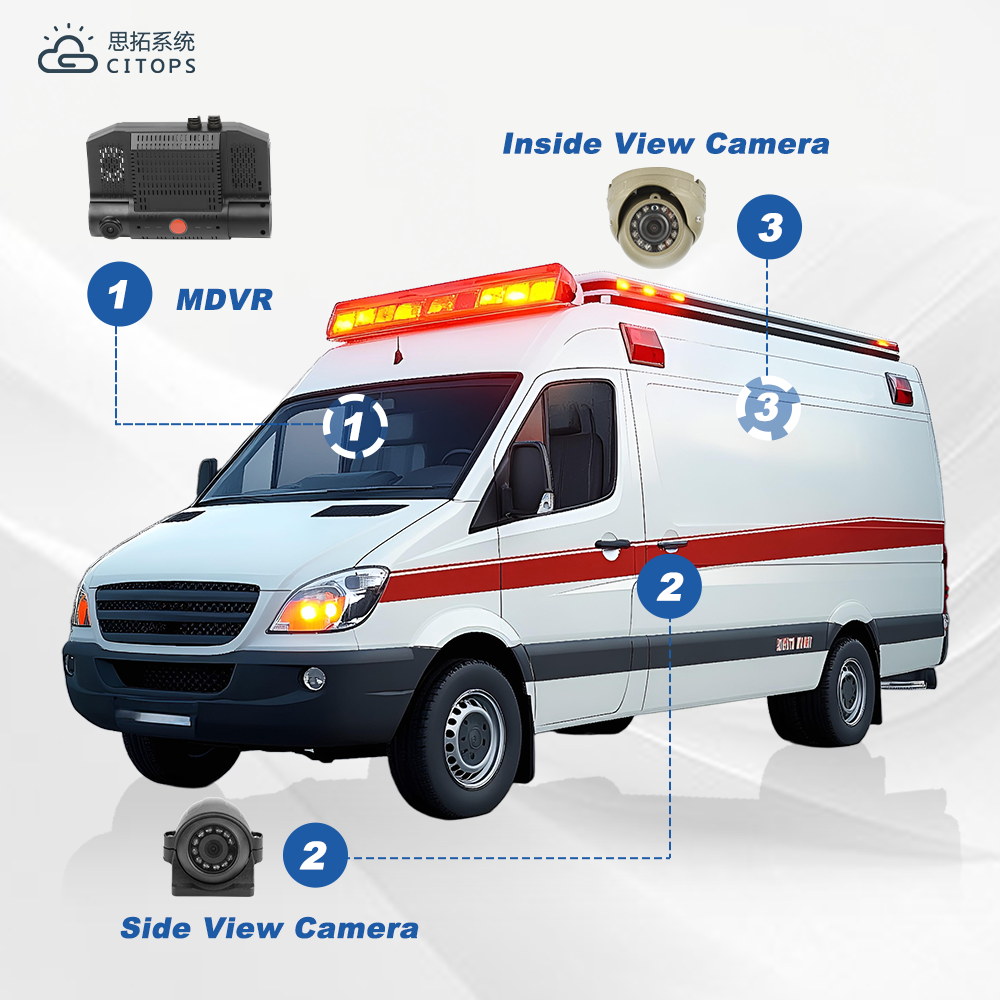
The MDVR records vehicle video, GPS location, timestamps and other supported vehicle data. The NEMT dispatch or scheduling system normally manages passenger information, trip assignments, pickup and drop-off status and appointment details. The two systems can operate independently or be integrated when compatible APIs, protocols or platform connections are available. Integration requirements should be confirmed before deployment.
GPS helps dispatch locate vehicles and review route history. Combined with timestamps and recorded video, it can provide useful supporting evidence for pickup, drop-off and service disputes. However, GPS and video alone do not replace the trip status, passenger or authorization records maintained by the NEMT dispatch system.
Local storage keeps continuous or event-based recording inside the vehicle. Optional 4G connectivity can support authorized live view, GPS tracking, event upload and remote video access when network conditions allow and the selected MDVR and platform configuration support those functions. Because NEMT vehicles may operate across different coverage areas, the sample test should confirm what continues locally during a network interruption and how authorized users retrieve the video afterward.
NEMT video may include passengers, caregivers, mobility equipment and medical destinations. Camera positions should focus on safety and service review without unnecessarily capturing documents, screens or other sensitive information.
Operators can keep these controls practical by defining who may access live and recorded video, how long footage is retained and when clips may be exported. Audio recording should be evaluated separately according to company policy and applicable local requirements.
Optional AI driver monitoring can be considered for fleets that need additional driver-safety functions such as DMS or ADAS, depending on the selected MDVR model and project configuration. AI is not required for every NEMT deployment.
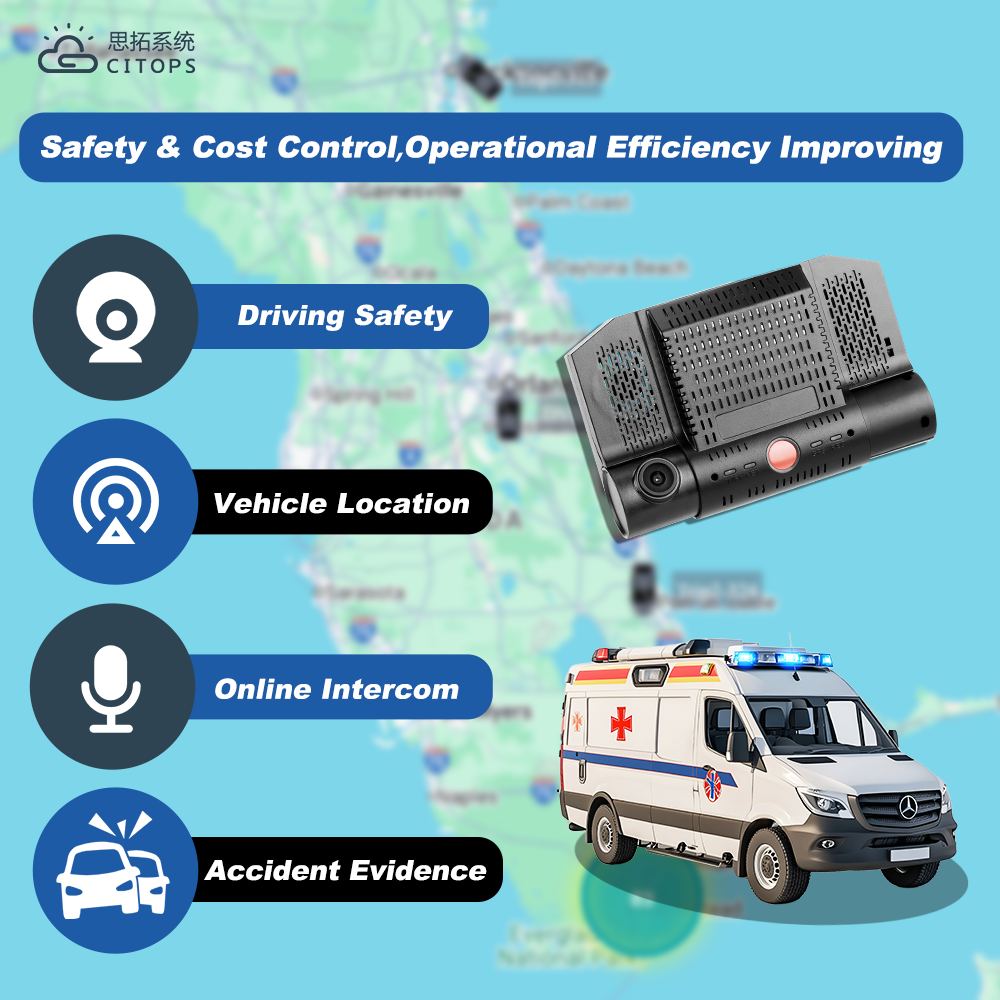
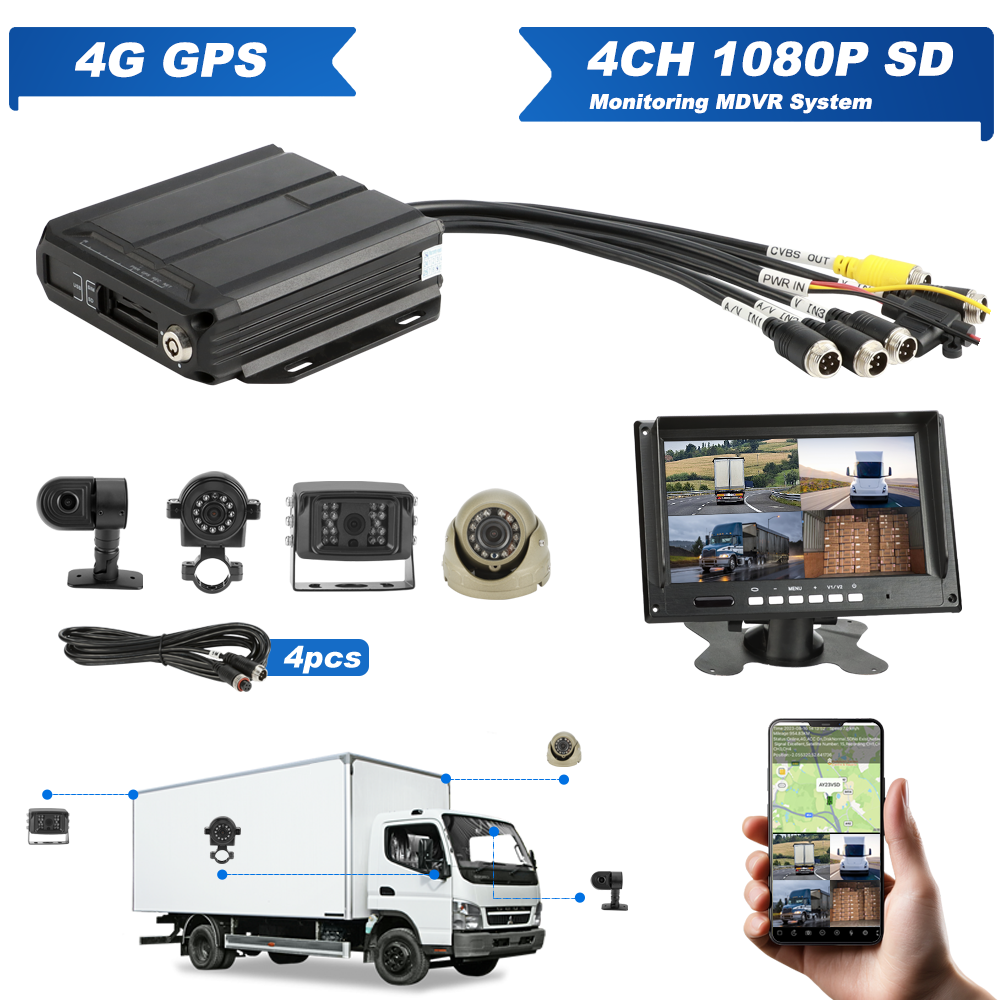
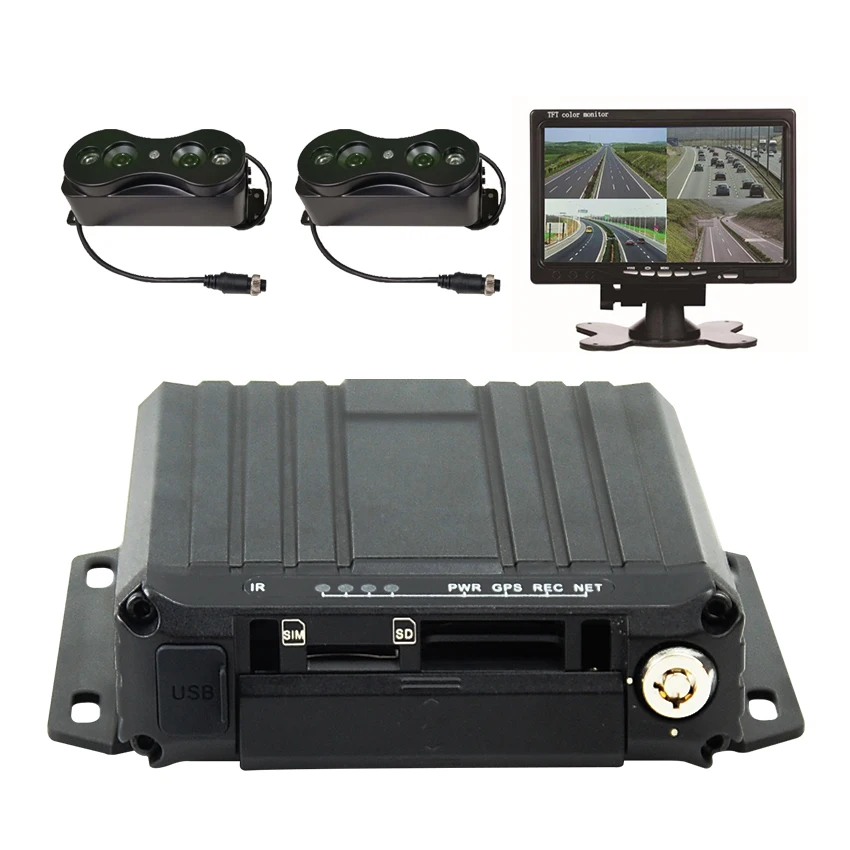
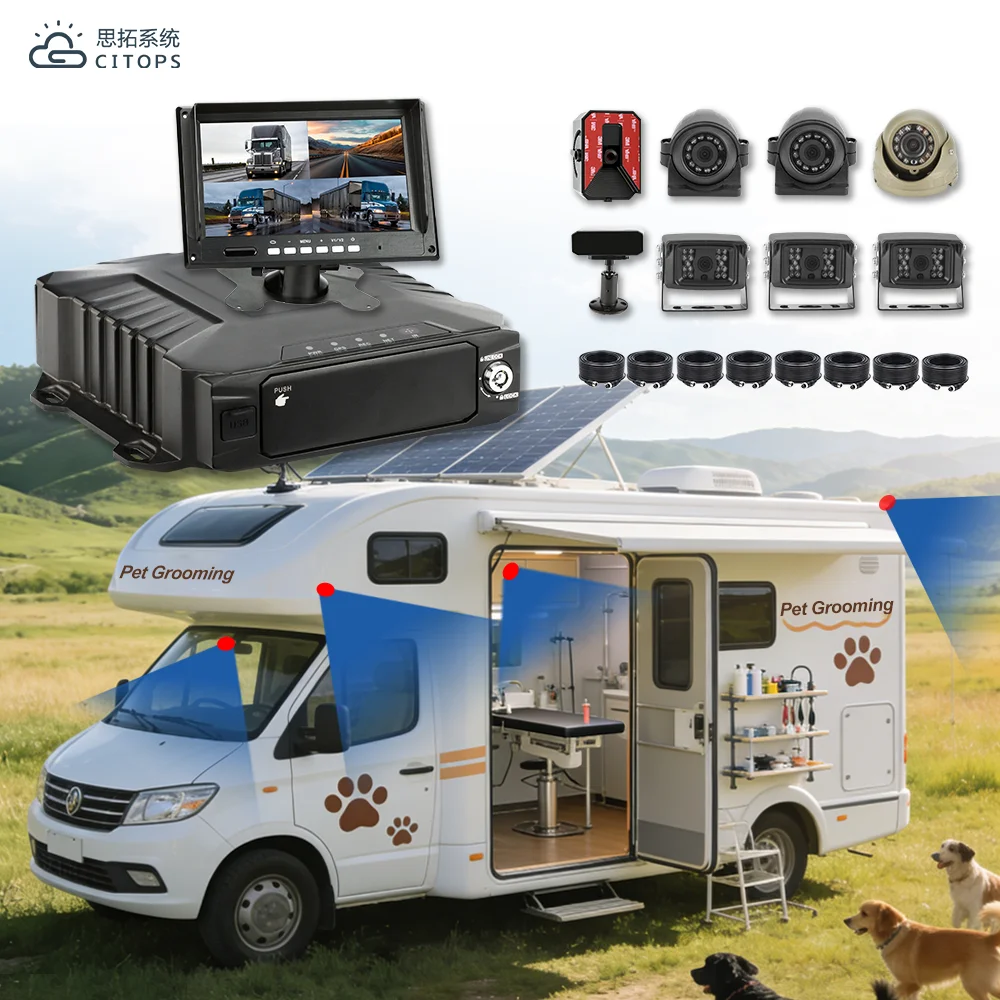
The CITOPS M16Hv four-channel MDVR is a practical starting point for NEMT sedans and wheelchair-accessible vans that require up to four independent camera views. CITOPS materials describe four 1080p AHD inputs, H.264/H.265 recording, Dual SD Storage, and optional 4G, Wi-Fi and GPS functions. Availability of connectivity, platform and other project-dependent functions must be confirmed for the selected configuration. A larger accessible vehicle or a design with more views may require a different recorder.
Buyers who need an introduction to the full system can also review how an MDVR works in fleet management. The final NEMT quotation should list every camera, storage medium, antenna, cable, input, platform service and permission requirement.
Test one complete system on a representative NEMT vehicle before bulk deployment. Use a normal training or approved service route to verify camera coverage, recording quality, GPS history, remote access and video retrieval under real operating conditions.
After the sample meets the operating requirement, record the approved camera map, model, storage, connectivity, platform roles, access settings and installation kit in the bulk order. If sedans and accessible vans have different layouts, approve a separate configuration for each vehicle group.
Send CITOPS your vehicle types, fleet size, required road, cabin, passenger door, wheelchair-lift and rear views, daily operating hours, video retention target, network requirements and remote access needs. If integration with an existing NEMT dispatch platform is required, include the platform name and available API or protocol information. Contact CITOPS for a proposed camera map, sample bill of materials and function checklist.

Q: How many cameras does an NEMT vehicle need?
A: A sedan may need two to four views, while an accessible van or paratransit vehicle may need road, cabin, side door or lift, rear and additional exterior coverage. Count the independent views required by the service workflow before choosing the recorder.
Q: Can GPS and video help verify an NEMT trip?
A: GPS, timestamps and video can provide supporting evidence that a vehicle reached a location and show what happened around a pickup or drop-off. They do not replace the passenger, trip status or authorization records maintained by the NEMT dispatch system.
Q: Is a cabin camera appropriate for NEMT?
A: Yes, when passenger safety, incident review or service disputes require an interior view. Position the camera for useful cabin coverage while avoiding unnecessary close-up capture of personal documents or screens, and control access to recorded footage.
Q: Does the camera system need to connect to dispatch software?
A: Not necessarily. Many fleets use the MDVR platform and NEMT dispatch system side by side. Integration is useful when the operator wants GPS, vehicle or video-related data connected with Trip ID, driver, vehicle or dispatch records. Confirm available APIs, protocols, required data fields and implementation responsibility before deployment.
Q: How long should NEMT video be retained?
A: Set the retention period from complaint timing, operational review needs, contract requirements and available storage. Retention should balance operational review needs, contract requirements, storage capacity and privacy considerations.
Q: What should be tested before a bulk NEMT order?
A: Test camera coverage, day and low-light recording, video search and export, retention, GPS, network interruption, platform permissions and any optional door, lift, alarm or AI function included in the selected configuration on a representative vehicle.
Product functions and specifications vary by model, market and final bill of materials. Confirm the exact recorder, cameras, storage, connectivity, software service and accessories in the quotation before purchase.
 Hot News
2026-09-16
2026-09-11
2026-09-04
2026-08-28
2026-08-14
2026-08-07

CITOPS delivers cutting-edge in-vehicle video systems with 4G GPS tracking, AI algorithms, and cloud monitoring. Trusted in 120+ countries, we offer customized MDVR solutions for enhanced fleet safety and operational efficiency.
11/F,BlockA,Delux Sci-Tech Park,No.5 Guanle Street, Longhua District,518110,Shenzhen,China.
Copyright © 2026 Shenzhen Citops Systems Co., Ltd. All rights reserved Privacy Policy
粤ICP备 14015289 号