 EN
EN
Quick Links
Delivery trucks are not only transportation tools. For many logistics companies, retail distributors, moving fleets, and last-mile delivery teams, each truck is also a mobile warehouse, a driver workspace, and a customer-facing service point. Once the vehicle leaves the warehouse, fleet managers need to know more than just where the truck is. They also need to understand whether the cargo is safe, whether the driver is operating responsibly, and whether delivery routes can be verified with clear evidence.
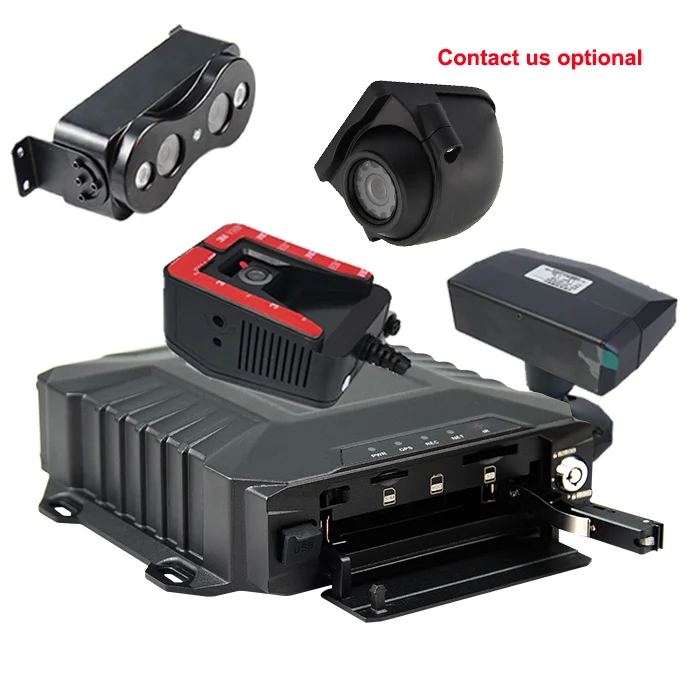
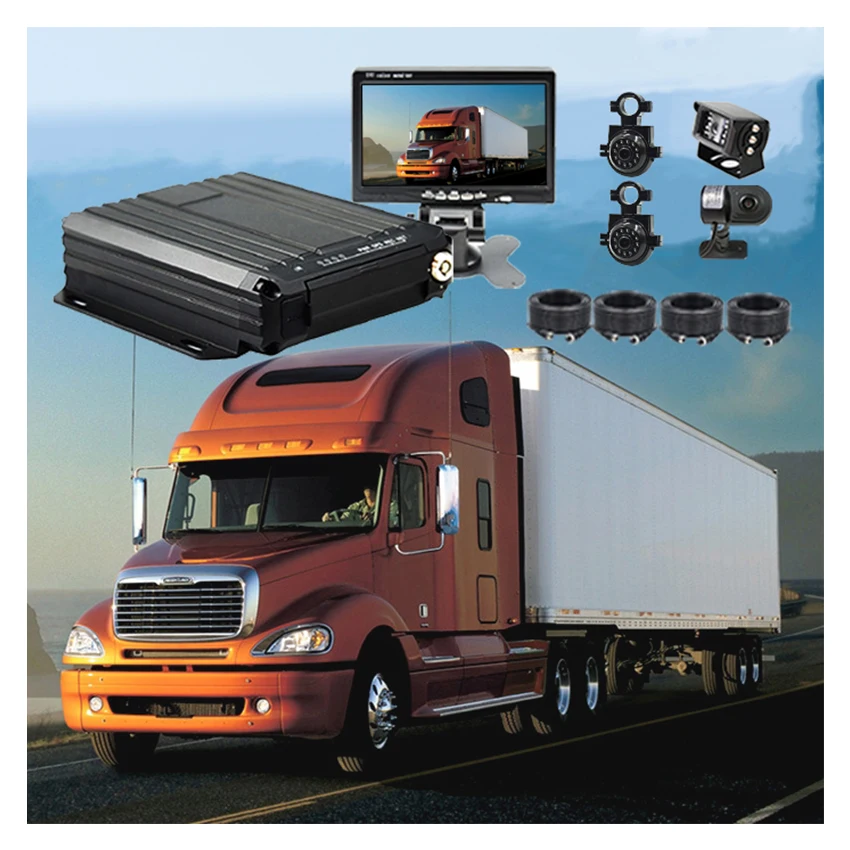
This is why a professional delivery truck camera system has become an important part of modern fleet management. Compared with a basic GPS tracker, a truck camera system can work with a professional MDVR system to combine video recording, driver monitoring, cargo area monitoring, GPS tracking, 4G remote access, and cloud platform management. It helps fleet operators see what is happening inside and around the vehicle, not only where the vehicle is moving.
Cargo security is becoming a bigger concern for transportation companies. Verisk CargoNet reported 3,625 cargo theft incidents across the United States and Canada in 2024, a 27% increase from 2023. At the same time, road safety remains a major pressure for commercial fleets. NHTSA reported that 528,177 large trucks were involved in police-reported crashes in 2023, with 153,452 people injured in crashes involving large trucks. These numbers show why video-based fleet monitoring is no longer just an optional upgrade. For delivery fleets, it is becoming a practical risk management tool.
Delivery trucks work in different environments every day, including warehouses, loading docks, city roads, residential streets, parking areas, and customer locations. A traditional GPS tracker can show the route and location, but it cannot explain what happened during loading, unloading, parking, or a delivery dispute.
A professional delivery truck camera system helps fill this gap. With cameras installed in the cab and cargo area, fleet managers can review real video evidence when problems occur. If goods are missing, damaged, or delivered with a complaint, the company can check the video instead of relying only on driver statements or customer feedback.
For small fleets, this improves daily control. For larger delivery fleets, it creates a more standardized management process. Managers can check live video, review historical footage, track routes, and respond faster to abnormal situations. This helps reduce uncertainty and improves communication between drivers, dispatchers, warehouse staff, and customers.
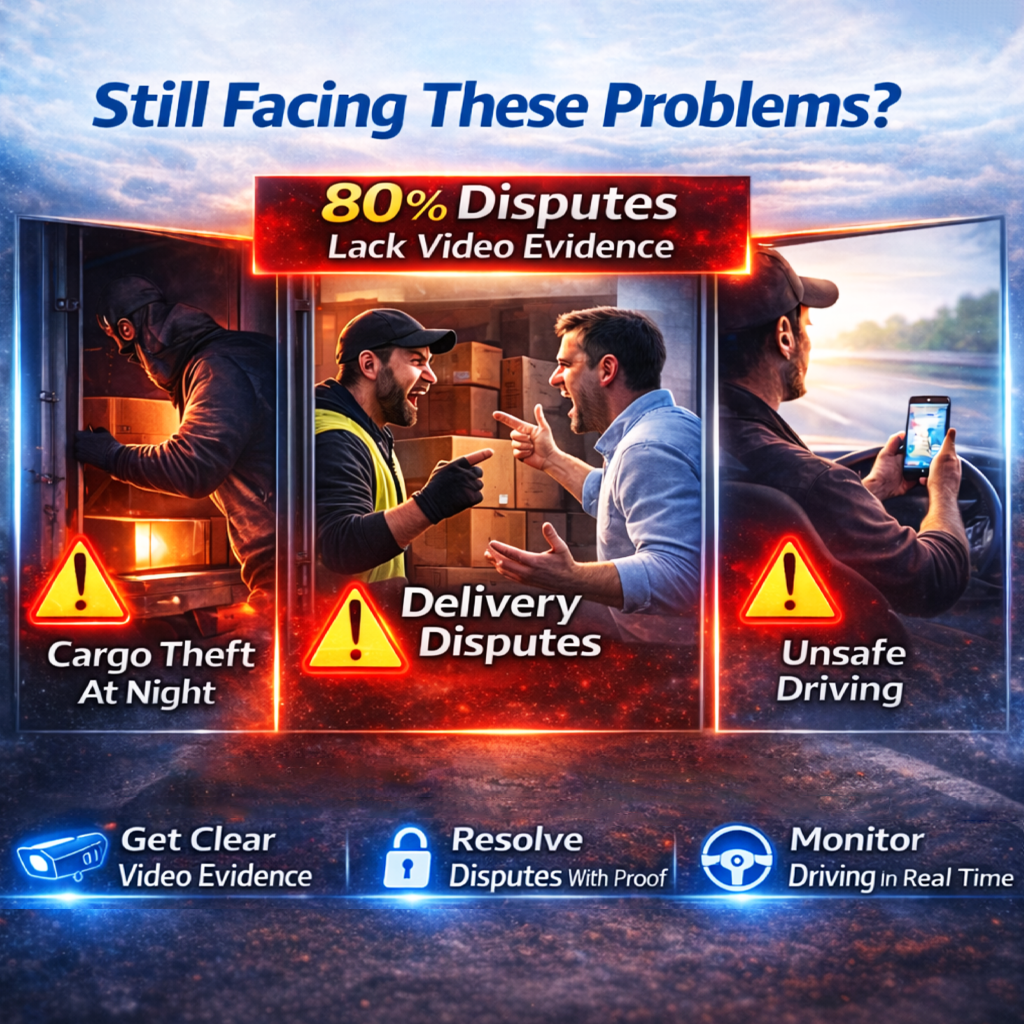
Delivery truck operations often face several common challenges. Cargo may be lost during loading or unloading. Goods may be stolen while the vehicle is parked. Drivers may be blamed for damage that happened before the truck arrived. Customers may claim missing items without enough proof. Fleet managers may also struggle to confirm whether a vehicle followed the planned route or stopped at an unauthorized location.
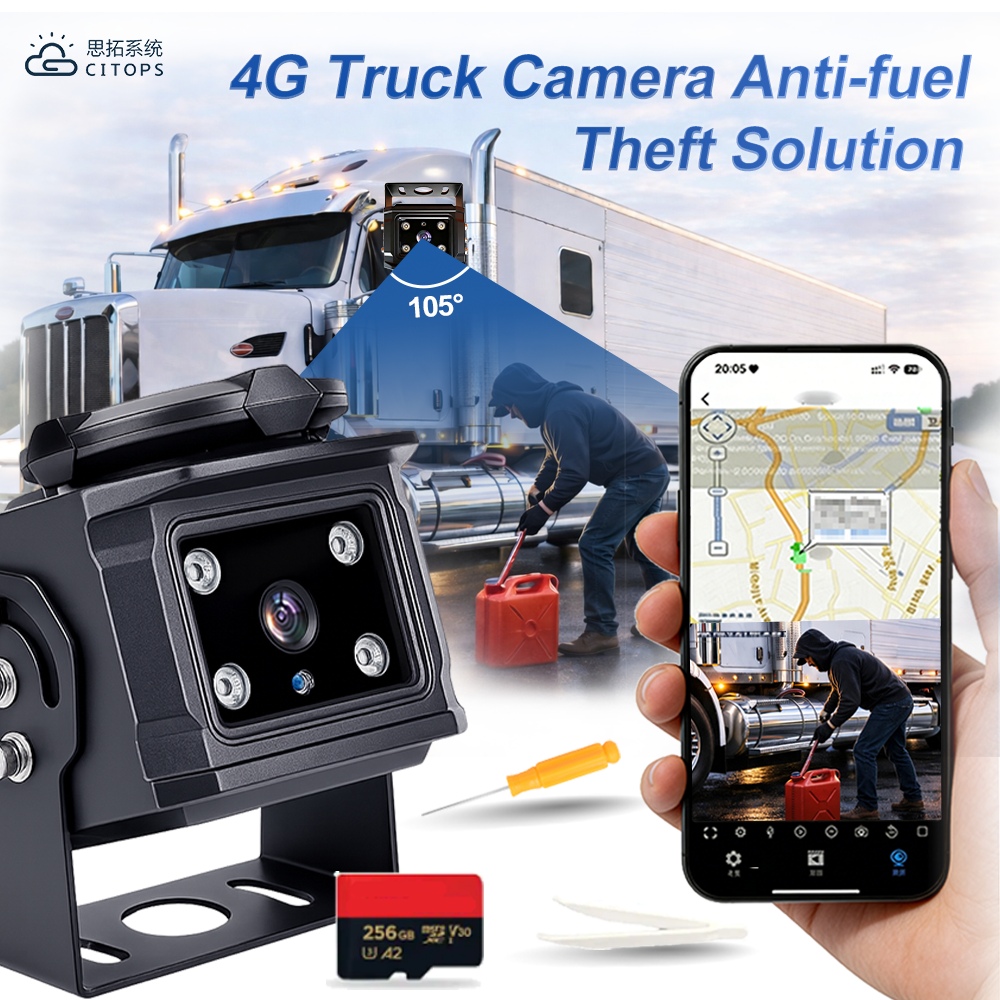
Cargo theft is especially difficult because it does not always happen during long-distance transportation. Many incidents happen during short stops, warehouse transfers, parking periods, or delivery handovers. For fleets carrying electronics, tools, retail goods, food, auto parts, furniture, or high-value products, the risk can be even higher.
Another problem is the lack of evidence. Without video, a dispute may become a matter of opinion. This can increase compensation costs, insurance pressure, and customer dissatisfaction. A delivery truck camera system gives fleet operators a clearer way to verify events and protect both the company and the driver.
A well-designed truck camera system can monitor the cargo area throughout the delivery process, helping fleet operators record loading, unloading, cargo movement, door access, and suspicious activity around goods. A cargo view camera installed inside the truck box can record loading, unloading, cargo movement, door access, and suspicious activity around goods. When video is combined with GPS tracking, managers can match footage with time and location.
For example, if a customer reports missing cargo, the fleet manager can check whether the goods were loaded correctly, whether the truck stopped somewhere unexpectedly, and whether the cargo area was opened during transport. If goods were damaged, video can help confirm whether the damage occurred during loading, driving, unloading, or customer handover.
Some systems also support event-based video recording. When sudden braking, impact, door opening, or abnormal movement happens, important video clips can be saved separately. This helps prevent key evidence from being overwritten by normal loop recording. For delivery fleets, this function is important because managers do not want to search through hours of normal footage. They need to find useful evidence quickly.
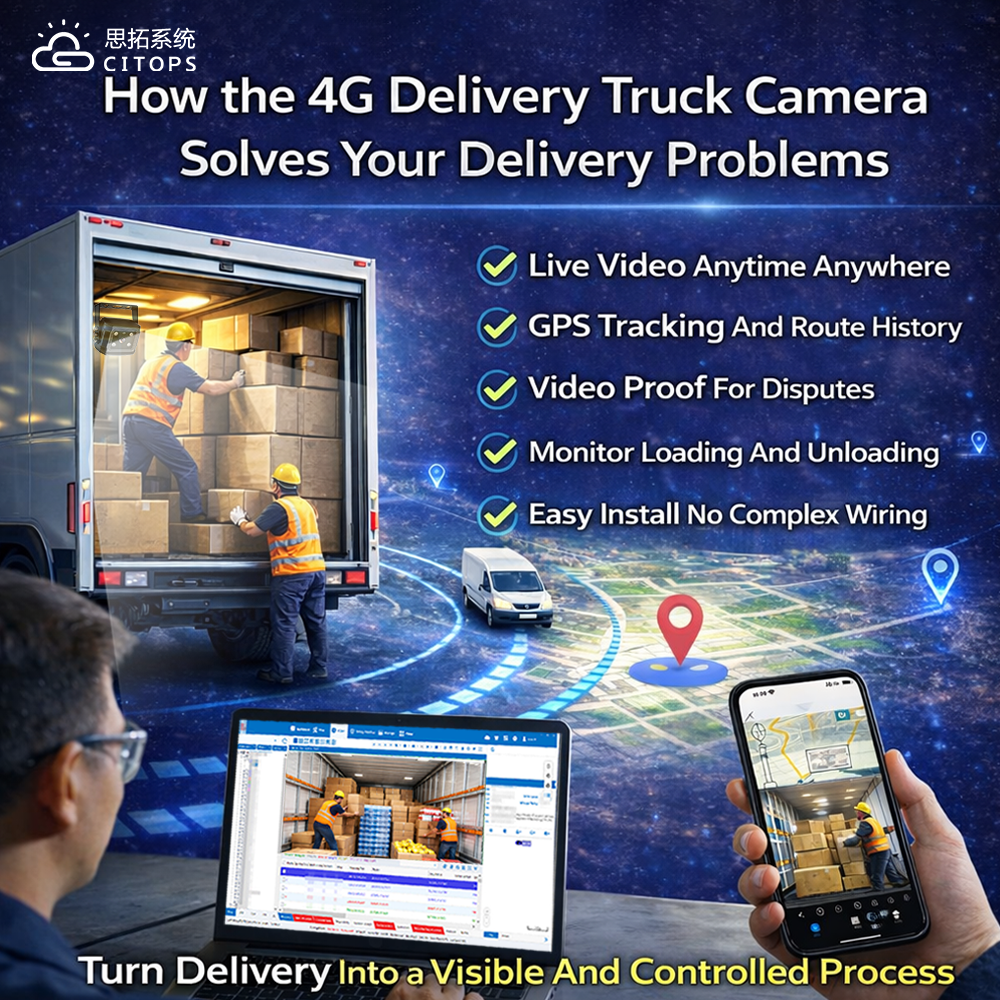
Driver behavior directly affects cargo safety, accident risk, fuel cost, vehicle maintenance, insurance claims, and customer experience. Harsh braking, fatigue, distraction, speeding, sharp turns, and unsafe driving can all increase operational risk.
A driver monitoring camera, such as an M93Hv 2CH camera installed near the windshield wiper area, can monitor the driver’s condition and cab activity. It helps fleet managers understand what happened before and during an incident. The purpose is not simply to watch drivers, but to improve safety, support driver coaching, and protect responsible drivers from false claims.
Fleet video technology has already shown measurable value. Verizon Connect’s 2024 Fleet Technology Trends Report found that fleets using video technology reported benefits such as 77% improved protection from false claims, 73% improved driver safety, 48% reduced accident costs, and 44% reduced insurance costs. For delivery companies, these benefits can translate into fewer disputes, safer driving habits, and stronger evidence when accidents or complaints happen.
The best delivery truck camera system should not be judged only by camera resolution. A complete system should include stable video recording, suitable camera placement, GPS tracking, 4G transmission, cloud platform access, local storage, remote playback, and reliable installation support.
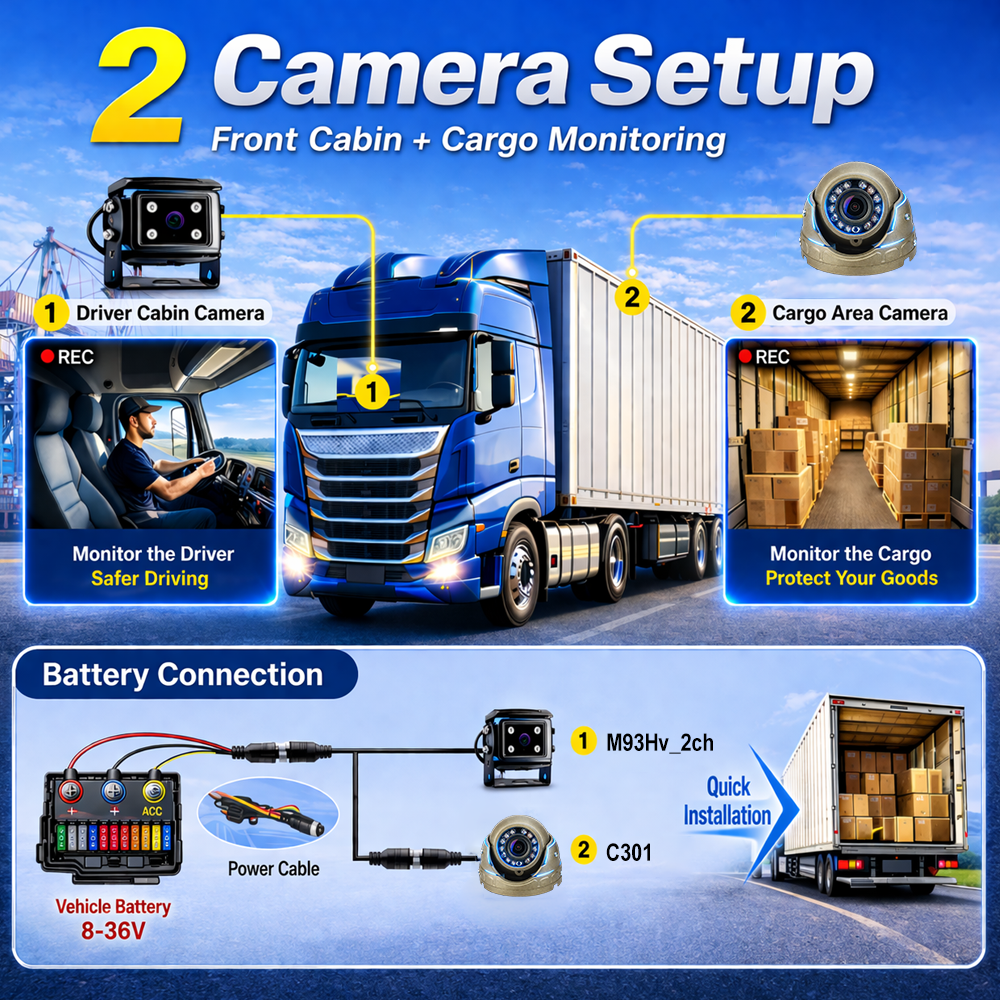
For many delivery trucks, a 2-channel system is a practical configuration. One camera monitors the driver, while another camera monitors the cargo area. This setup directly covers the two most important areas: driver behavior and cargo security. For larger vehicles or higher-risk fleets, a 4-channel or multi-channel MDVR system can add road view, rear view, side view, or blind spot coverage.
Important features may include 1080P video, night vision, wide-angle view, H.265 compression, anti-vibration design, local storage, GPS route history, live video access, event alerts, and cloud-based fleet management. If the cargo area is dark, night vision is especially important. If the vehicle operates on rough roads, anti-vibration reliability should also be considered.
Camera installation should follow the actual monitoring goal.For driver monitoring, the M93Hv 2CH 4G vehicle camera should be installed near the lower windshield or windshield wiper area, facing toward the driver. This position helps capture driver behavior clearly without blocking the driver’s view. This position helps capture driver behavior clearly without blocking the driver’s view.
For cargo security, the C610 cargo view camera should be installed inside the cargo box, usually on the ceiling or upper inner wall. This allows the camera to cover the cargo area, boxes, loading process, and door area as much as possible. The camera should be positioned to avoid blind spots and should not be blocked by stacked goods.
A simple and effective 2-channel delivery truck configuration is:
M93Hv 2CH Driver Monitoring Camera near the windshield wiper area for driver behavior and cab monitoring.
C610 Cargo View Camera inside the cargo box for cargo area monitoring, loading verification, and theft prevention.
This setup is suitable for delivery trucks, moving trucks, logistics vehicles, retail distribution vehicles, and many commercial fleets that need both driver safety and cargo visibility.
CA cloud-based fleet management platform turns vehicle cameras into a complete fleet monitoring solution. Instead of waiting for the truck to return and removing storage devices manually, managers can check live video, GPS location, route history, alarm events, and playback records remotely. Instead of waiting for the truck to return and removing storage devices manually, managers can check live video, GPS location, route history, alarm events, and playback records remotely.
For daily delivery operations, this is very useful. Dispatchers can confirm whether a vehicle is on route. Managers can check whether cargo is still inside the truck. Customer service teams can respond faster when a customer asks about delivery status. If an incident happens, the company can review key video clips and location records more efficiently.
GPS tracking also improves operational visibility. According to Verizon Connect’s 2024 report, 70% of surveyed fleets used GPS tracking solutions, and 41% of GPS tracking users reported positive ROI in less than one year.When GPS fleet tracking is combined with video, fleet managers gain not only location data but also visual evidence, making it easier to verify routes, delivery stops, parking time, and abnormal events.
Choosing the right supplier is just as important as choosing the right device. A delivery truck camera system involves cameras, installation positions, cables, storage, 4G network, GPS, platform software, mobile access, and after-sales support. If the supplier only sells hardware but does not understand vehicle installation and fleet management, the system may not perform well in real operations.
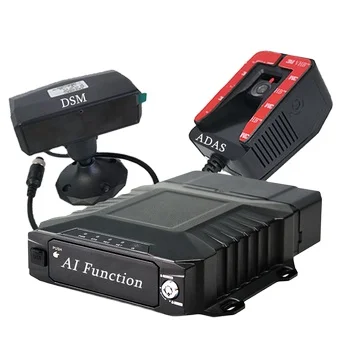
A professional supplier should be able to provide a complete solution based on vehicle type, cargo risk, route environment, fleet size, and management needs. For some customers, a 2-channel camera system is enough. For others, an MDVR system with multiple cameras, AI functions, sensors, displays, and cloud platform management may be more suitable.
The best solution is not always the most complicated one. It should solve the real problem: protecting cargo, monitoring drivers, tracking vehicles, and providing reliable evidence when needed.
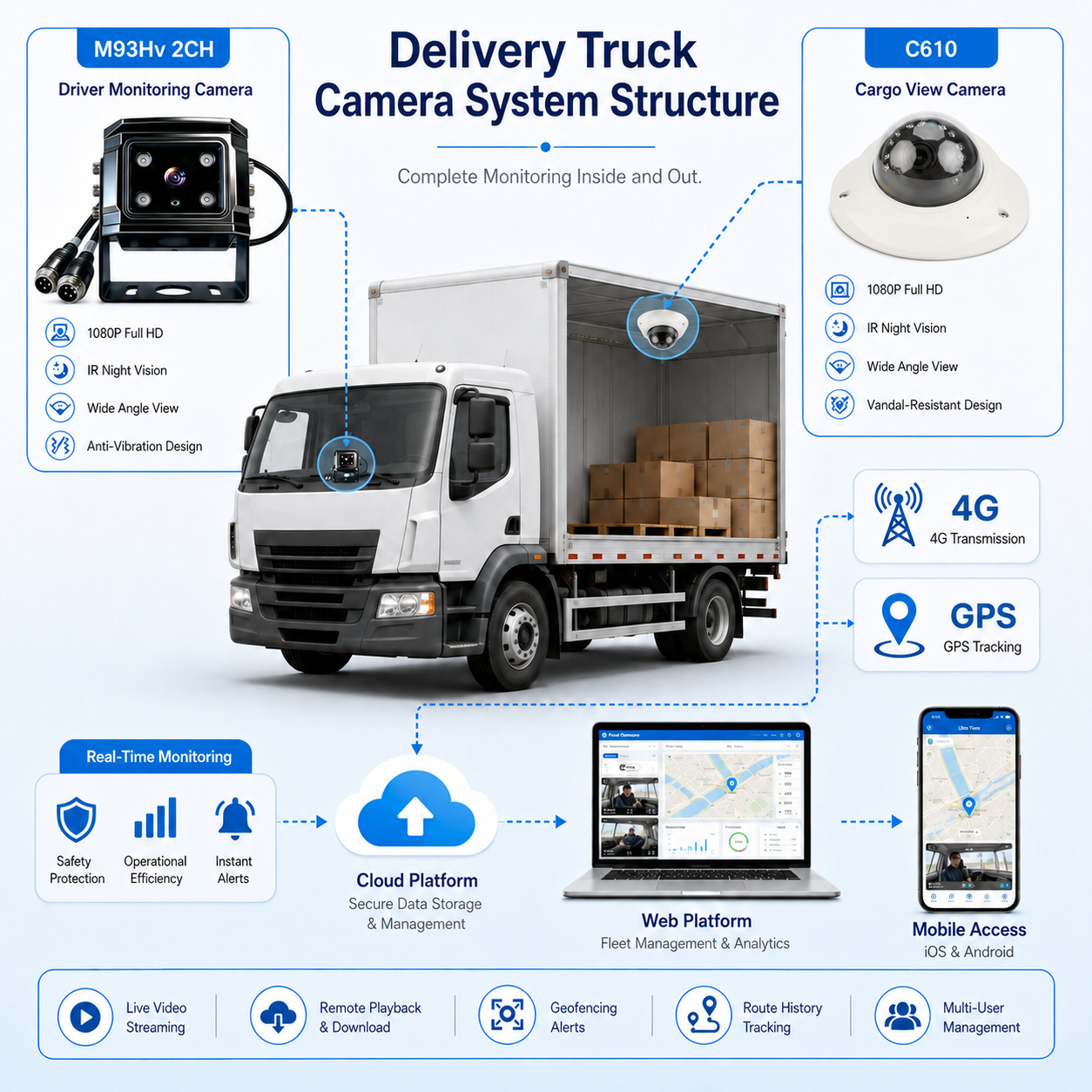
A reliable delivery truck camera system helps fleet operators protect cargo, monitor drivers, track vehicles, and manage daily delivery risks with clear video evidence. Whether you manage a small delivery team or a larger commercial fleet, the right system can improve safety, reduce disputes, and make fleet management more transparent.
CITOPS provides professional vehicle video monitoring and fleet management solutions for delivery trucks, logistics vehicles, moving trucks, commercial fleets, and other business vehicles. We can help you configure the right solution with driver monitoring, cargo view cameras, GPS tracking, 4G remote video, local storage, and cloud platform management.
Need a custom delivery truck camera system for your fleet? Contact CITOPS today to get a practical solution based on your vehicle type, cargo risk, and management needs.

A delivery truck camera system is a vehicle-mounted video monitoring solution designed for delivery fleets. It usually includes driver monitoring cameras, cargo area cameras, GPS tracking, 4G transmission, local storage, and cloud platform access. The system helps fleet managers monitor vehicles, drivers, cargo, and routes in real time.
A truck camera system records the cargo area during loading, transportation, parking, and unloading. If goods are missing or damaged, managers can review video footage and GPS route history to understand what happened. This helps reduce disputes and provides evidence for cargo security management.
For a 2-channel delivery truck camera system, one camera should be installed near the lower windshield or windshield wiper area to monitor the driver. Another camera should be installed inside the cargo box to monitor goods, loading activity, and cargo movement.
A GPS tracker only shows location and route history. A delivery truck camera system provides both video and GPS data. For fleets that need cargo protection, driver monitoring, accident evidence, remote video playback, and better fleet control, a camera system is more complete than GPS tracking alone.
Yes. With 4G transmission and a cloud platform, fleet managers can view live video, check GPS location, review historical footage, and download important clips through a web platform or mobile app. This is especially useful for companies managing multiple delivery vehicles.
 Hot News
2026-09-24
2026-09-16
2026-09-11
2026-09-04
2026-08-28
2026-08-14

CITOPS delivers cutting-edge in-vehicle video systems with 4G GPS tracking, AI algorithms, and cloud monitoring. Trusted in 120+ countries, we offer customized MDVR solutions for enhanced fleet safety and operational efficiency.
11/F,BlockA,Delux Sci-Tech Park,No.5 Guanle Street, Longhua District,518110,Shenzhen,China.
Copyright © 2026 Shenzhen Citops Systems Co., Ltd. All rights reserved Privacy Policy
粤ICP备 14015289 号