 EN
EN
Quick Links
For truck fleet operators, daily management is no longer only about knowing where a vehicle is. Managers also need to know what happened on the road, how drivers behaved, whether cargo was handled properly, and how to collect reliable evidence when accidents, theft, or delivery disputes occur. This is why a professional MDVR system for trucks has become an important upgrade from traditional GPS tracking.
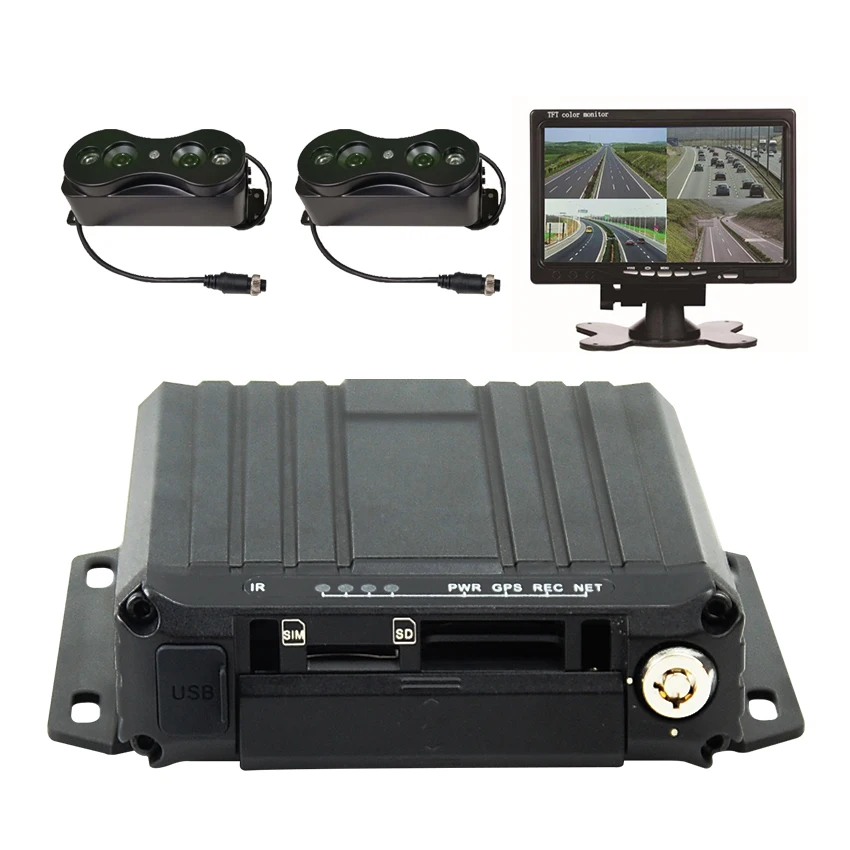
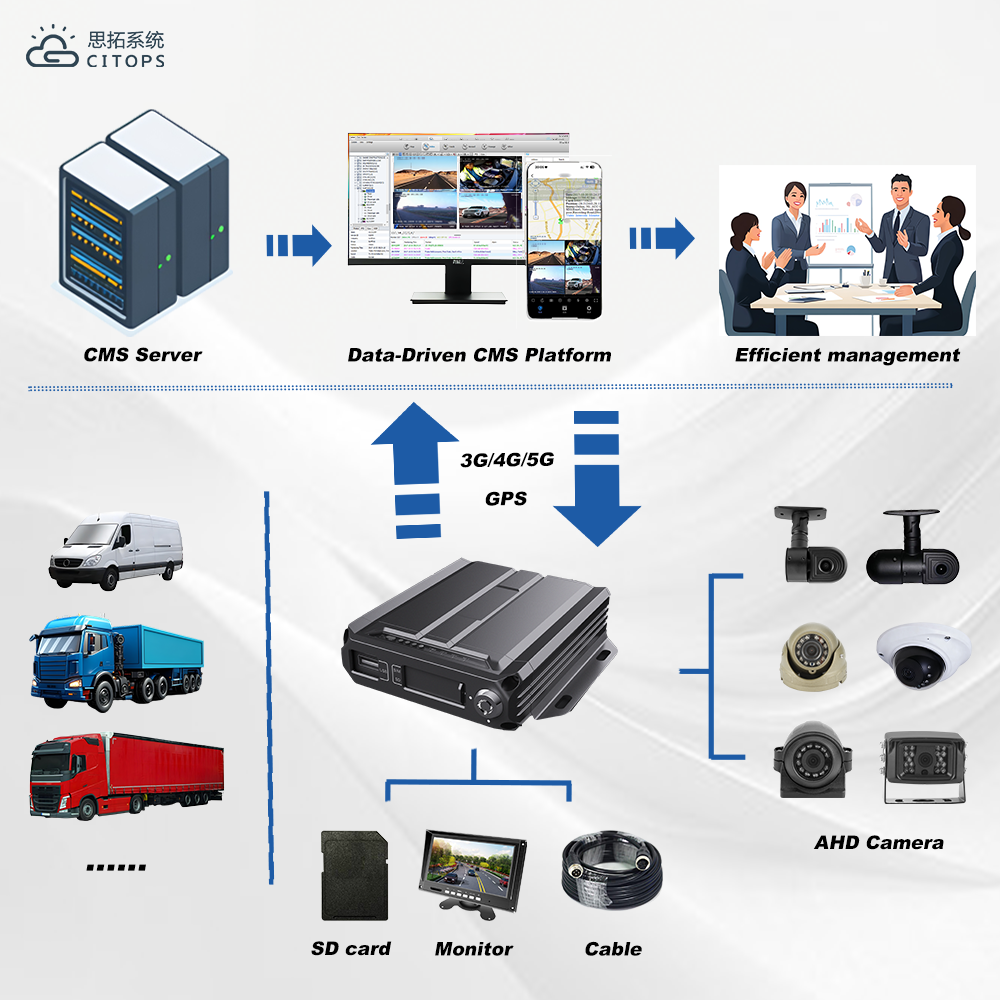
A truck MDVR system combines multi-channel video recording, GPS positioning, 4G remote transmission, local storage, and cloud platform management. Instead of giving fleet managers only a dot on the map, it provides real video evidence, route history, driving behavior records, and remote access through web or mobile devices.
According to FMCSA large truck and bus crash data, 6,050 large trucks and buses were involved in fatal crashes in 2022, a 2% increase from 2021. This shows why commercial fleets need stronger visibility and risk control, not just basic location tracking.
An MDVR system for trucks is a vehicle video monitoring solution designed for commercial vehicles such as freight trucks, delivery trucks, logistics vehicles, refrigerated trucks, and long-haul fleets. Unlike a normal dash camera, an MDVR is built for long-term vehicle operation, multi-camera recording, vibration resistance, large storage, and remote fleet management.
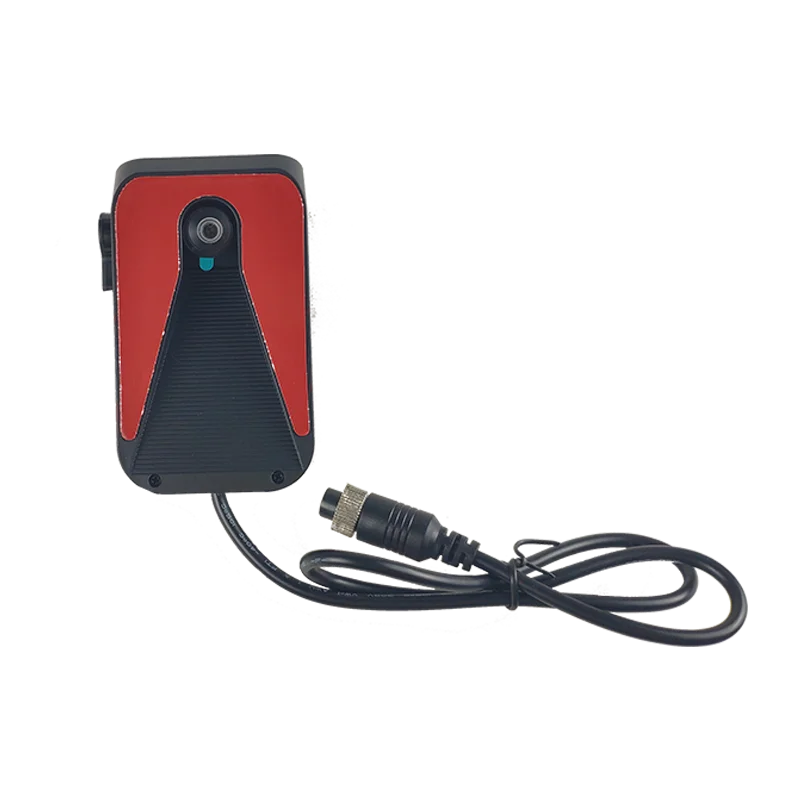
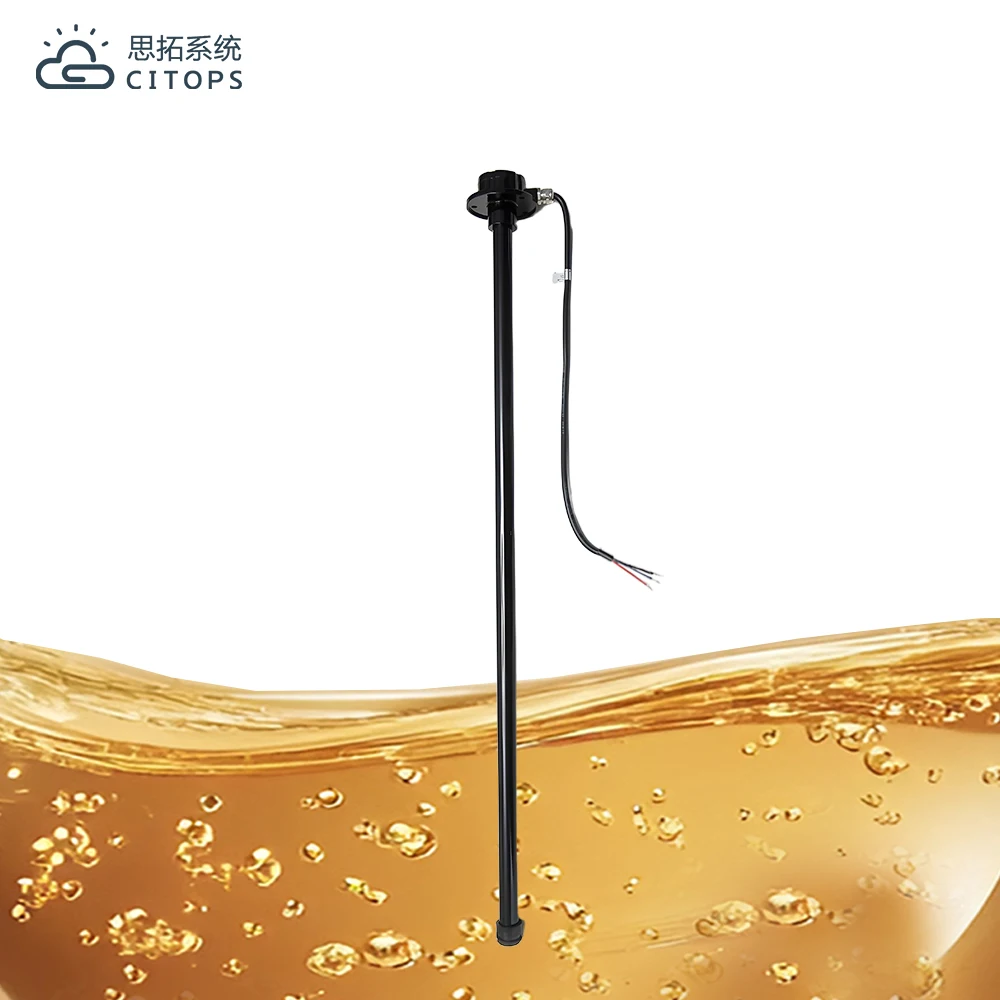
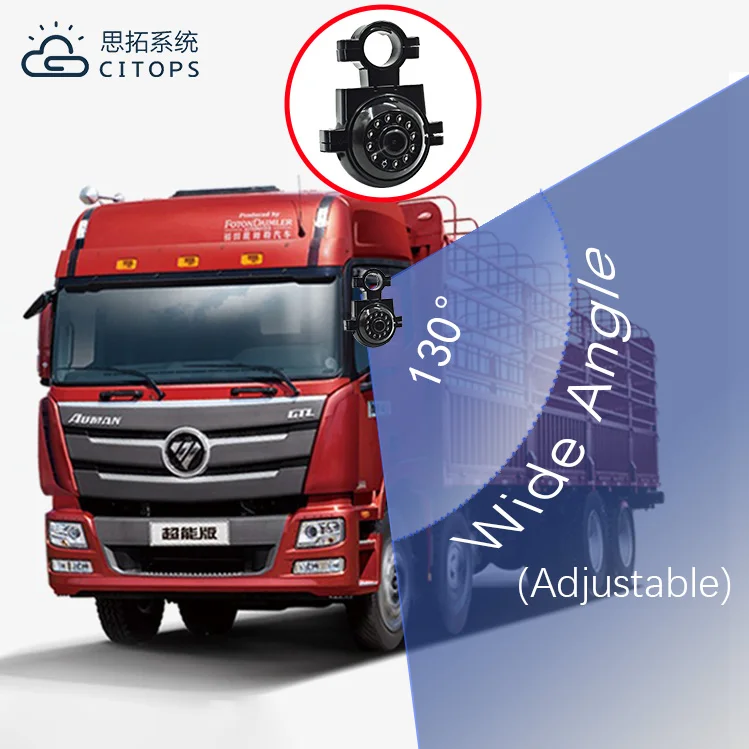
A typical truck MDVR solution includes a mobile DVR host, front camera, driver-facing camera, cargo area camera, side or rear camera, GPS antenna, 4G module, storage device, and cloud platform access. For fleets that need more advanced safety functions, the system can also support ADAS, DMS, BSD, fuel sensor integration, and alarm linkage.
For example, a truck fleet may install one camera facing the road, one camera monitoring the driver, one camera covering the cargo area, and one camera watching the rear or blind spot. All video can be recorded locally and uploaded or viewed remotely through the cloud platform when needed.
GPS tracking is useful, but it only answers one basic question: where is the truck? For modern fleet management, this is not enough.
When cargo is missing, GPS cannot show whether the goods were loaded correctly, unloaded at the right place, or opened during transportation. When a customer complains about delivery damage, GPS cannot provide video proof. When a driver is involved in a road accident, GPS can show the location and route, but it cannot clearly show road conditions, driver behavior, or the real cause of the incident.
This is where a video GPS fleet management system becomes more valuable. Video helps explain what GPS data cannot. Fleet managers can review route history together with video footage, making it easier to understand the full event process.
Cargo theft is also a serious issue for trucking companies. CargoNet recorded 3,607 supply chain crime events across the United States and Canada in 2024, showing that freight security remains a major concern for logistics operators.
Driver behavior has a direct impact on fuel cost, accident risk, vehicle wear, and fleet reputation. A truck MDVR system can help fleet operators monitor unsafe driving behaviors such as fatigue driving, distraction, harsh braking, speeding, smoking, phone use, or not wearing a seat belt.
With a driver-facing camera and DMS function, the system can detect abnormal driver behavior and trigger alerts. With an ADAS camera, the system can support forward collision warning, lane departure warning, and headway monitoring. These functions do not replace driver responsibility, but they help fleet managers identify risks earlier and build better driver training programs.
For long-haul trucks, this is especially important because drivers spend long hours on highways and remote routes. When video, GPS, and alarm records are stored together, the fleet manager can review not only the result of an incident, but also the driving conditions before it happened.
A good truck camera system with ADAS and DMS is not only for recording accidents. It is also a practical tool for prevention, coaching, and daily safety management.
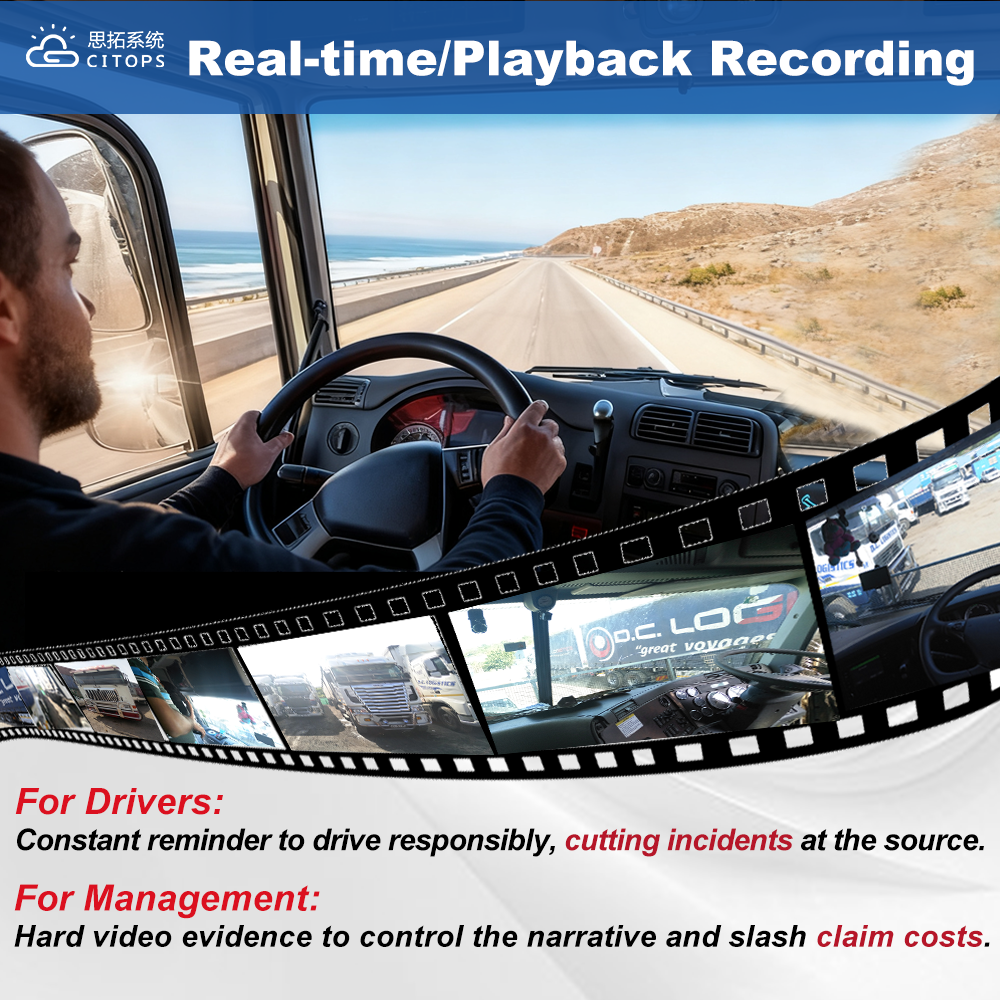
GPS tracking is still a core part of a truck MDVR system. The difference is that GPS data works together with video records and platform management.
Fleet managers can check real-time vehicle location, driving routes, parking time, route deviation, arrival time, and historical tracks. This is useful for dispatching, delivery confirmation, fuel management, and route optimization. If a truck stops at an unauthorized location, stays too long in one area, or deviates from the planned route, the manager can check the location first and then review video to understand the reason.
For logistics fleets, this combination is more reliable than using GPS alone. It helps answer practical questions: Did the truck arrive on time? Was the cargo unloaded correctly? Did the driver stop in a risky area? Was there any abnormal activity around the vehicle?
For fleet operators managing multiple trucks, video plus GPS provides stronger operational transparency. It helps reduce communication gaps between drivers, dispatchers, warehouse teams, and customers.
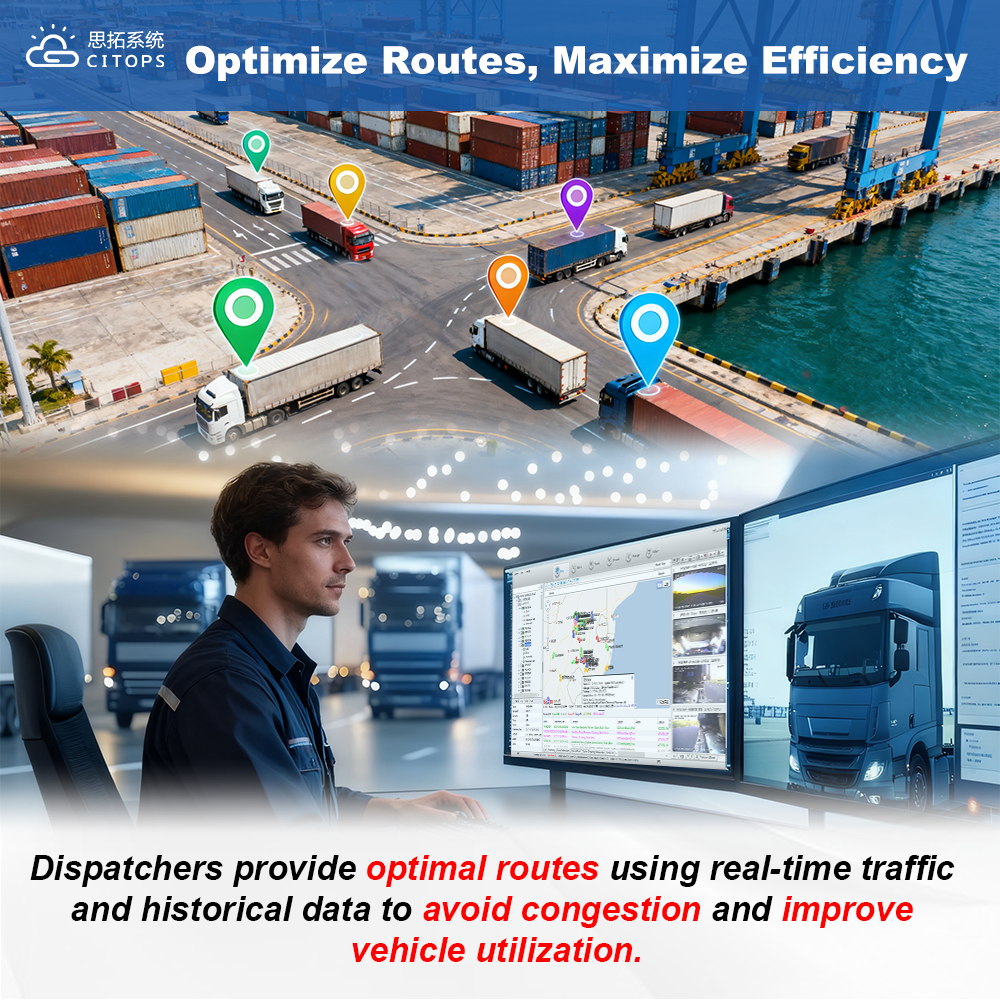
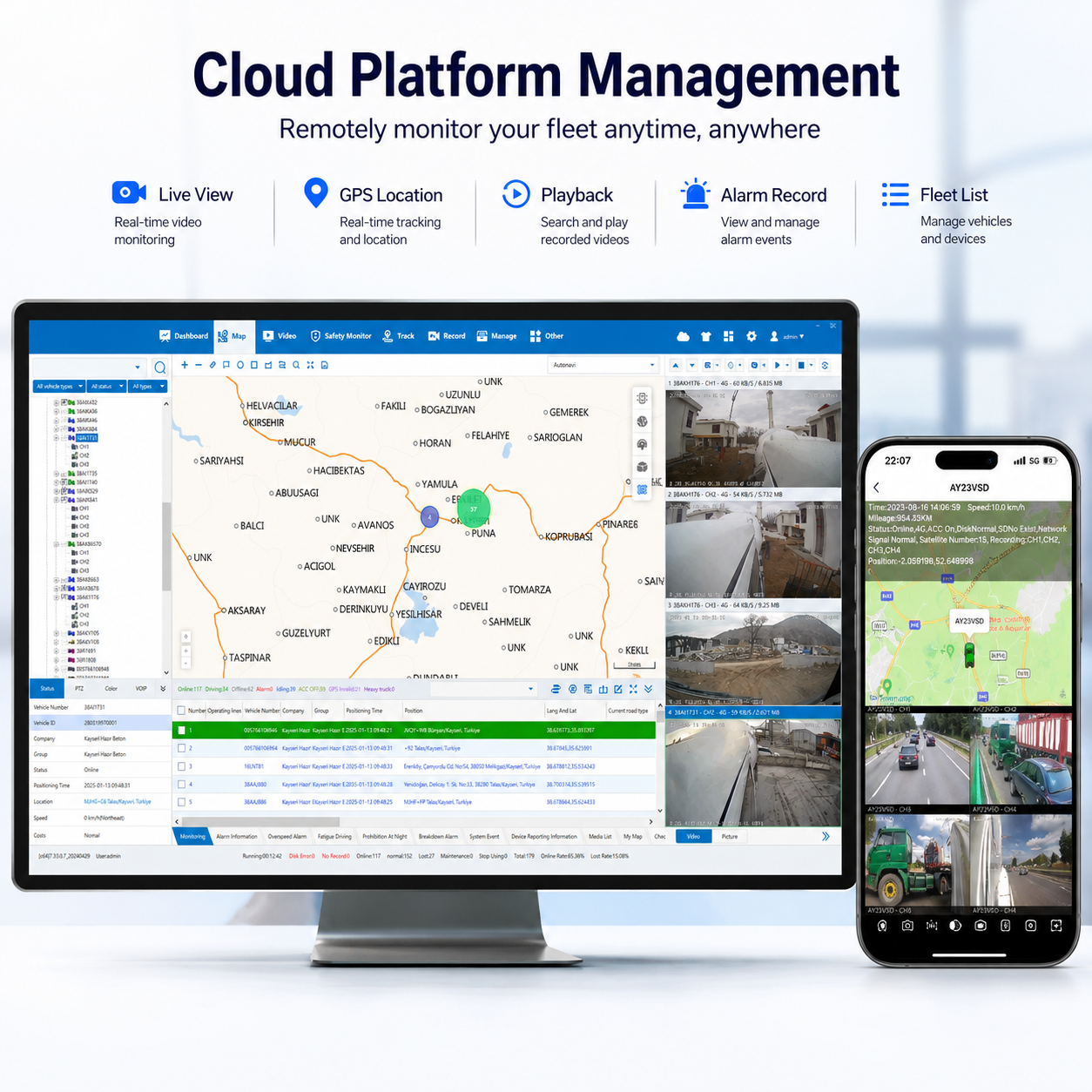
A cloud platform is the management center of a modern truck MDVR system. Through 4G network transmission, fleet managers can access live video, GPS location, alarm information, and playback records from a computer or mobile phone.
This is especially useful for companies operating trucks across different cities or regions. Managers do not need to wait until the truck returns to download video manually. When a problem occurs, they can log in to the platform, check the vehicle, view live footage, review historical video, and export evidence if required.
For large fleets, the cloud platform also helps organize vehicle groups, driver information, alarm records, route history, and device status. It gives managers a clearer overview of daily operations. However, it should be understood correctly: the platform supports supervision, evidence management, and decision-making. It does not replace human dispatching or fully automate fleet operations.
A reliable MDVR cloud platform should provide stable live view, remote playback, GPS tracking, alarm management, user permissions, and web or mobile access.
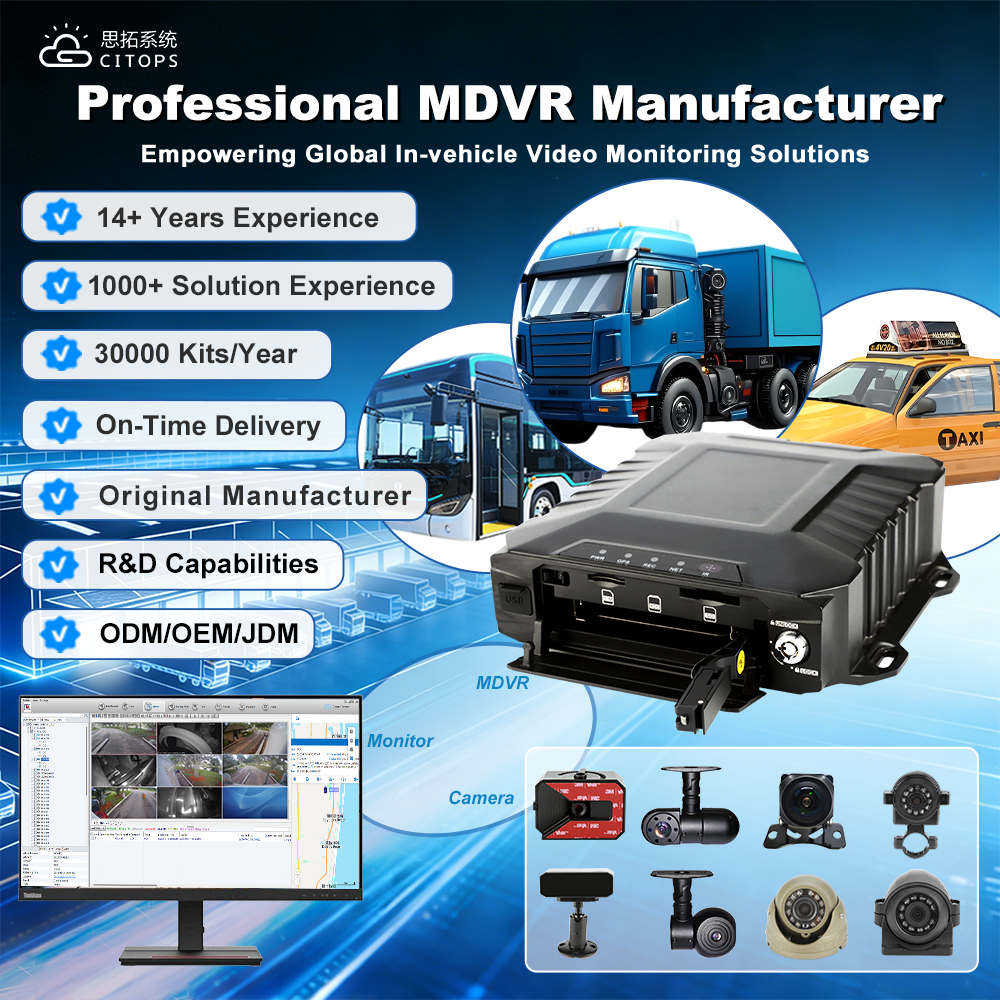
Choosing the right truck MDVR system depends on the vehicle type, number of cameras, management goals, installation environment, and budget.
For long-haul trucks, an 8-channel HDD MDVR may be suitable because it supports more cameras and larger video storage. For delivery trucks, a 4-channel MDVR or a 2-channel 4G camera solution may be enough for driver and cargo monitoring. For fleets that need safety alerts, ADAS, DMS, and blind spot detection can be added. For fleets concerned about cargo theft or fuel theft, cameras can be installed around the cargo area, fuel tank, side area, or rear door.
Fleet operators should also pay attention to storage reliability. Commercial trucks face vibration, temperature changes, long working hours, and unstable power conditions. A professional MDVR should support anti-vibration design, stable power input, loop recording, event video protection, and remote playback.
The best solution is not always the most expensive device. It is the system that matches the fleet’s real management problems. A professional supplier should help customers design the full solution, including MDVR host, cameras, cables, storage, sensors, AI functions, and cloud platform.
A truck MDVR system gives fleet managers more than location tracking. It connects video, GPS, storage, alarms, and cloud platform management into one practical fleet supervision solution. For trucking companies, this means better driver management, stronger cargo protection, clearer accident evidence, and more efficient daily operations.
Whether you manage long-haul trucks, delivery vehicles, refrigerated trucks, or mixed commercial fleets, a properly designed MDVR solution can help you reduce blind spots in fleet management and improve operational control.
Looking for a reliable MDVR system for trucks? CITOPS provides professional vehicle video monitoring solutions, including mobile DVR, truck cameras, GPS tracking, 4G remote video, AI safety functions, and cloud platform management. Contact us to get a customized truck fleet monitoring solution.

A normal dash camera usually records only front-view video for individual vehicles. A truck MDVR supports multiple cameras, GPS tracking, 4G remote access, larger storage, cloud platform management, and professional fleet monitoring functions.
Yes. The MDVR can record video locally to HDD, SSD, or SD card even without internet. However, 4G network access is required for live view, remote playback, GPS upload, and cloud platform management.
It depends on the MDVR model. Common options include 2-channel, 4-channel, 6-channel, 8-channel, and 12-channel systems. For trucks, 4-channel and 8-channel systems are commonly used.
Yes. Cameras can monitor cargo areas, rear doors, fuel tanks, and vehicle surroundings. Video records can provide evidence when cargo loss, unauthorized opening, or delivery disputes occur.
For single vehicles, local recording may be enough. For multiple trucks, a cloud platform is highly recommended because it allows remote live view, GPS tracking, playback, alarm checking, and centralized fleet supervision.
 Hot News
2026-09-16
2026-09-11
2026-09-04
2026-08-28
2026-08-14
2026-08-07

CITOPS delivers cutting-edge in-vehicle video systems with 4G GPS tracking, AI algorithms, and cloud monitoring. Trusted in 120+ countries, we offer customized MDVR solutions for enhanced fleet safety and operational efficiency.
11/F,BlockA,Delux Sci-Tech Park,No.5 Guanle Street, Longhua District,518110,Shenzhen,China.
Copyright © 2026 Shenzhen Citops Systems Co., Ltd. All rights reserved Privacy Policy
粤ICP备 14015289 号