 EN
EN
Quick Links

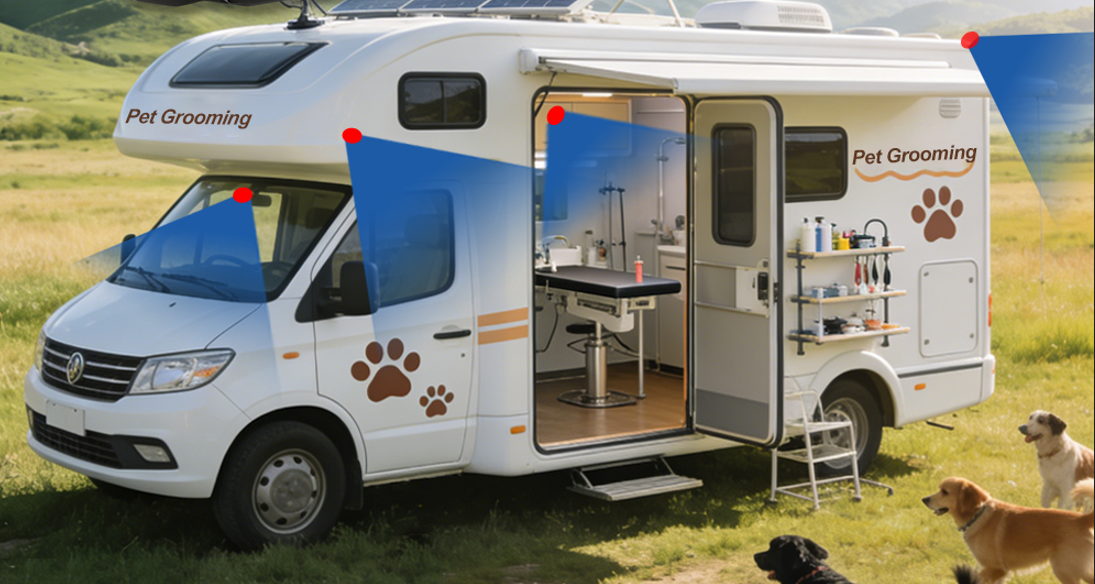
Mobile pet grooming is a trust-driven business, where disputes over pet handling.
service quality, oron-road safety can quickly damage a brand. Our client faced challenges such as customer complaints without visual proof, high driving risks from heavy onboard equipment, and difficulty managing multiple grooming vehicles.
1. What happens inside the van
Pet grooming is not a standardized production line. Every dog has a different temperament, coat condition, and mood. The common scenario: the groomer performs the procedure normally, but the pet gets nervous or fidgets on its own, causing a minor scratch from the scissors or an uneven trim. The client gets home, takes a look, and immediately calls to question: "What did you do to my dog?"
At this point, the groomer says "the dog moved on its own," and the client says "you're just not skilled." Neither side has evidence. The only way out is to waive the fee, offer compensation, or throw in freebies — you lose money and still end up looking guilty. Worse, some clients will post photos and complaints in pet groups or on Xiaohongshu. One negative post with a picture can damage your brand overnight, and you have no material to defend yourself with.
2. What happens on the road — heavy rigs don't stop on a dime
A fully loaded mobile grooming van carries hundreds of kilograms of water, plus a generator, dryers, lift tables, and crates. Total weight easily exceeds the vehicle's original design load. Driving this kind of heavy rig comes with two biggest threats:
Can't stop in time: With that much mass, braking distance is significantly longer than when empty. In city traffic, the car ahead can brake suddenly at any moment — if you're too close or not paying full attention, a rear-end collision is almost unavoidable.
Drivers get tired and distracted: Groomers are both technicians and drivers, covering 7-8 stops a day. They start early, often feel drowsy after lunch, and habitually check their phones to reply to client messages while waiting at red lights. Those few seconds of distraction are exactly when rear-end accidents happen.
3. Fleet grows, chaos follows — the owner's phone never stops ringing
Once the fleet exceeds 3 vans, the owner's daily routine becomes: in the morning, "Have you arrived at the client's place?"; at noon, "Are you done? Where's the next stop?"; in the afternoon, "How much water is left? Do you need to come back to refill?" — all trivial questions, all via endless calls and WeChat messages. When clients change appointment times or addresses on short notice, everything is manually recorded, leading to frequent mix-ups. One wrong dispatch means empty miles burned, wasting both fuel and time.
Solutions: Eyes inside, brains outside, a map on the backend
1. Inside the van — install a "dashcam" that faces the dog
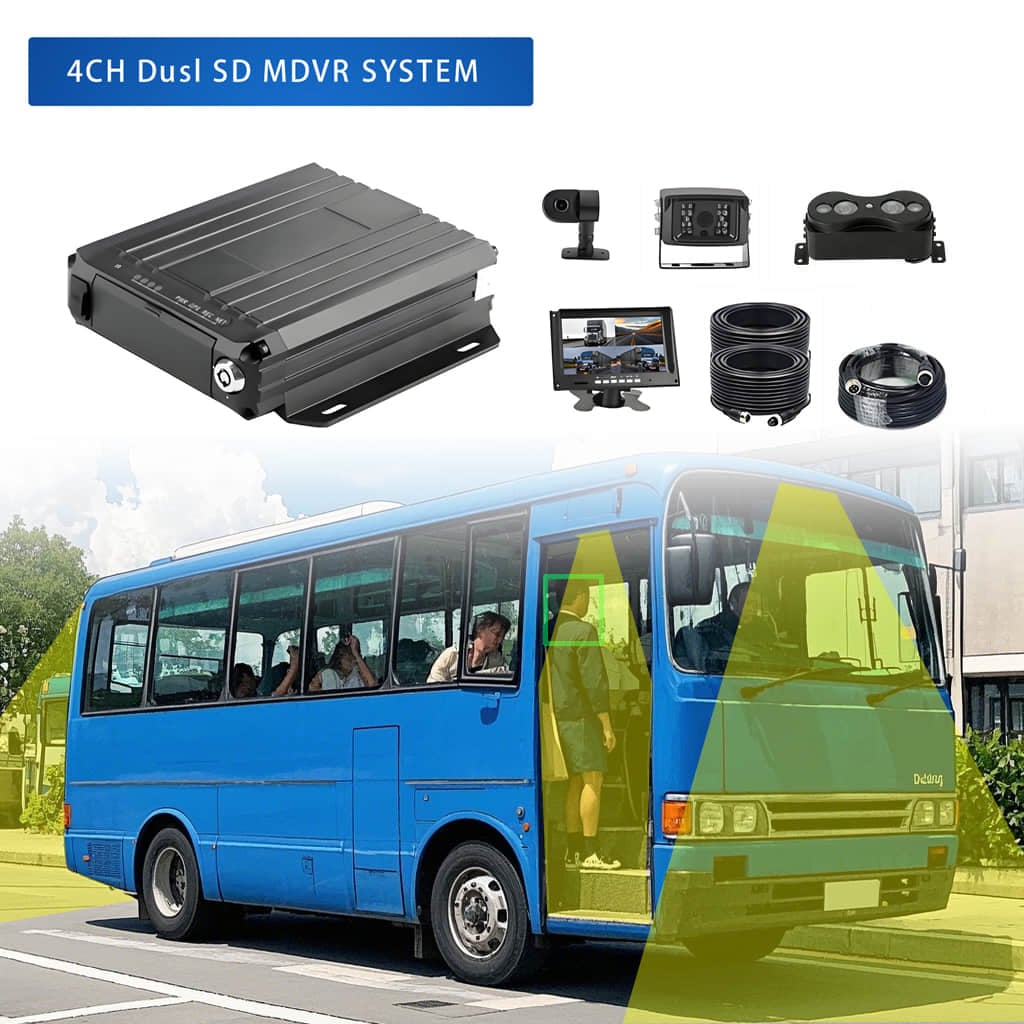
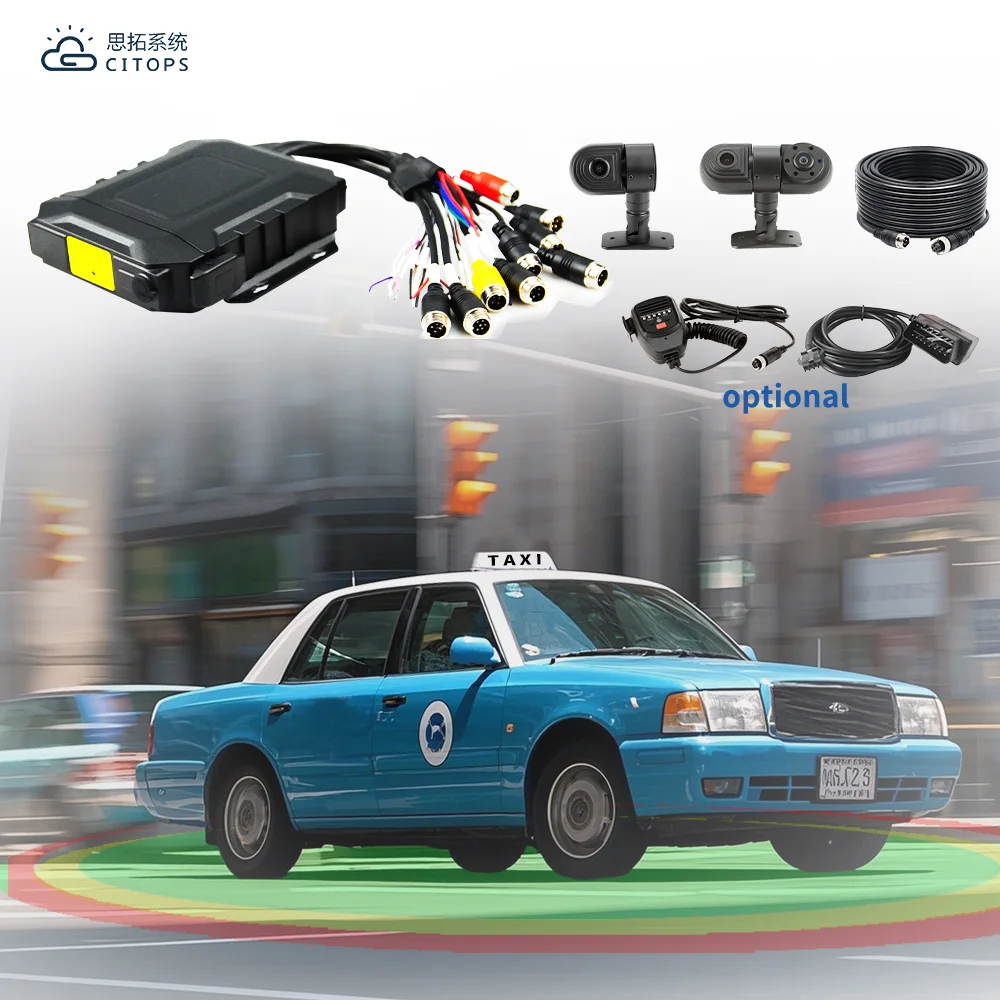
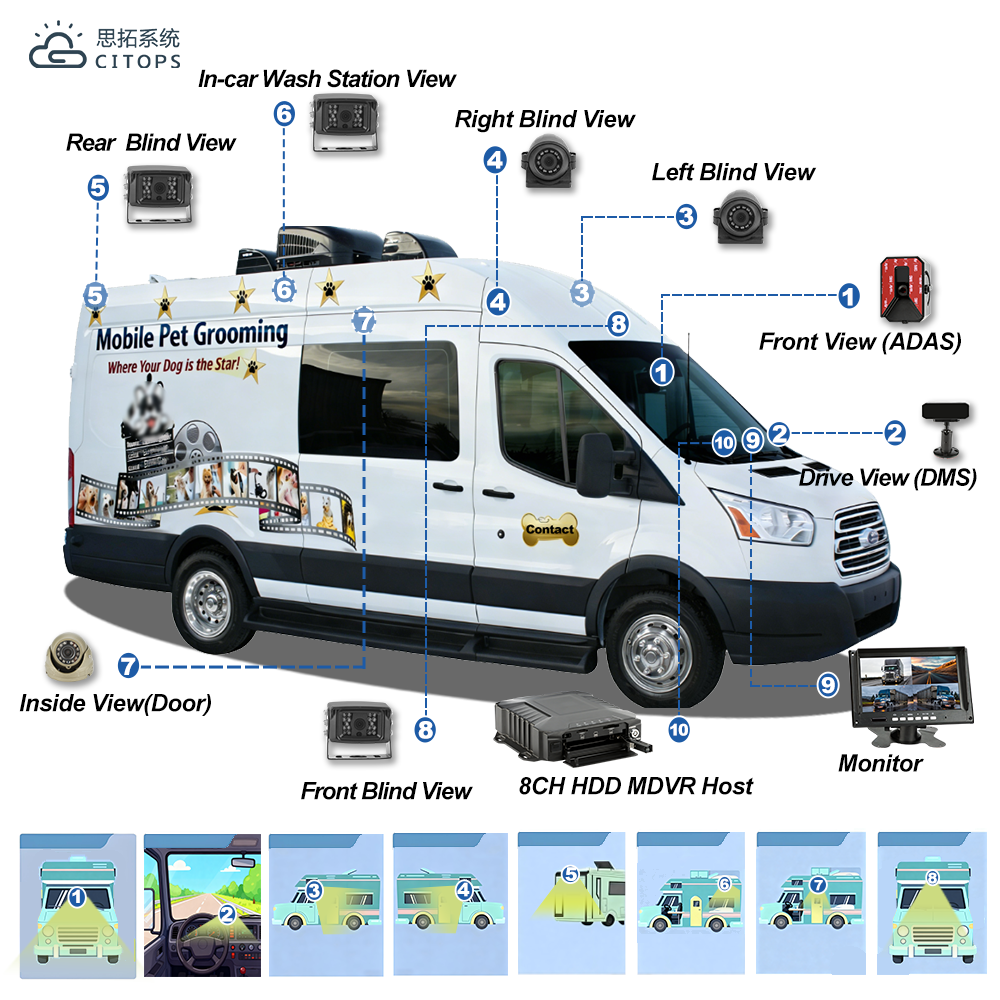
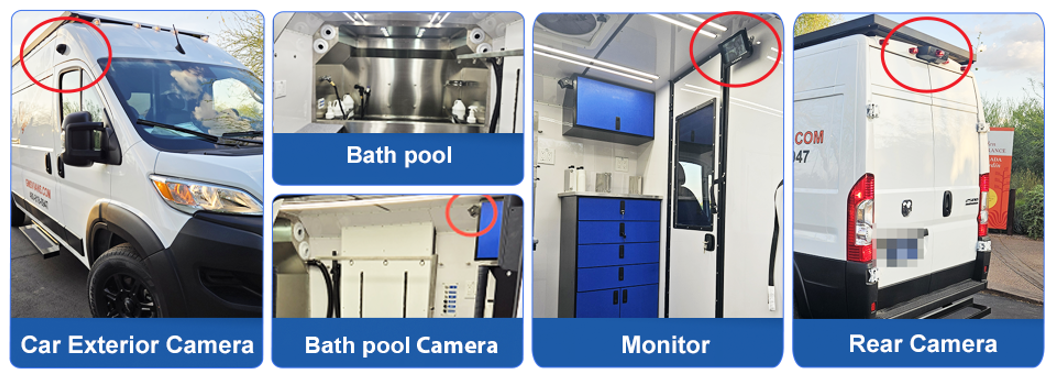
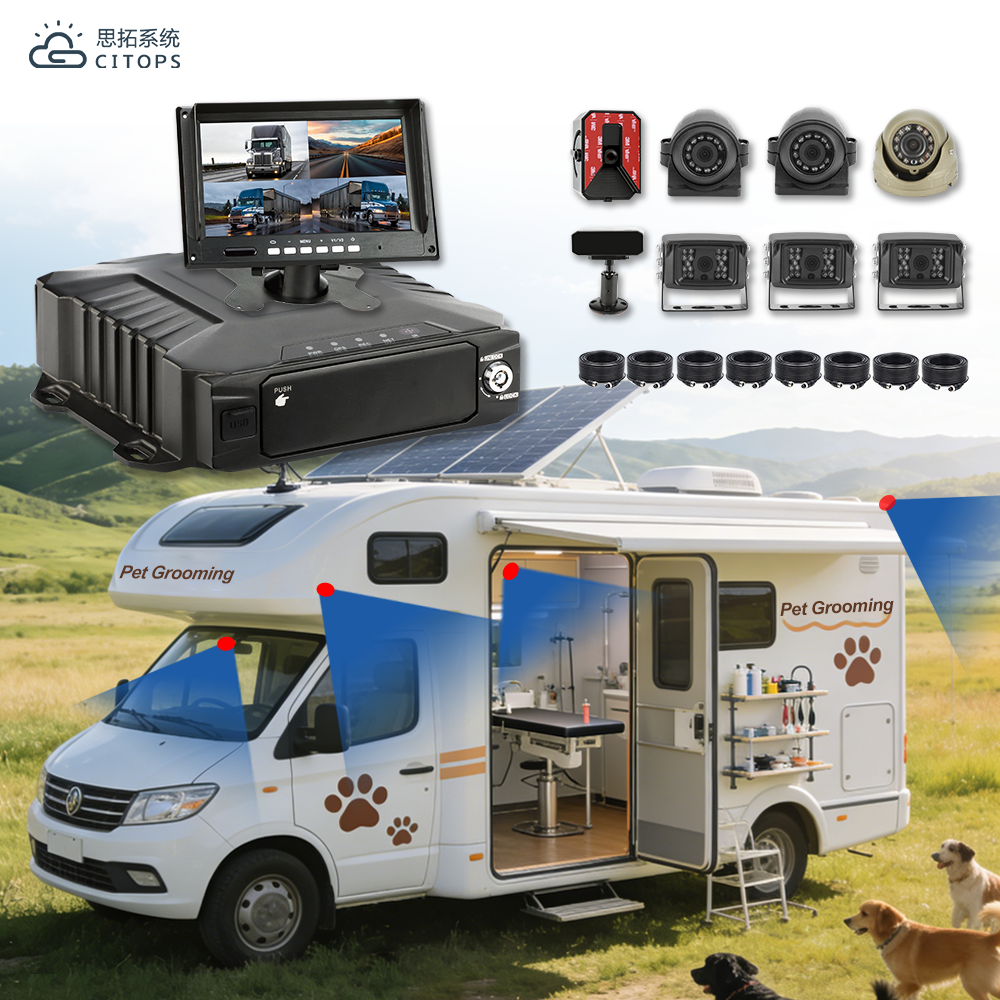
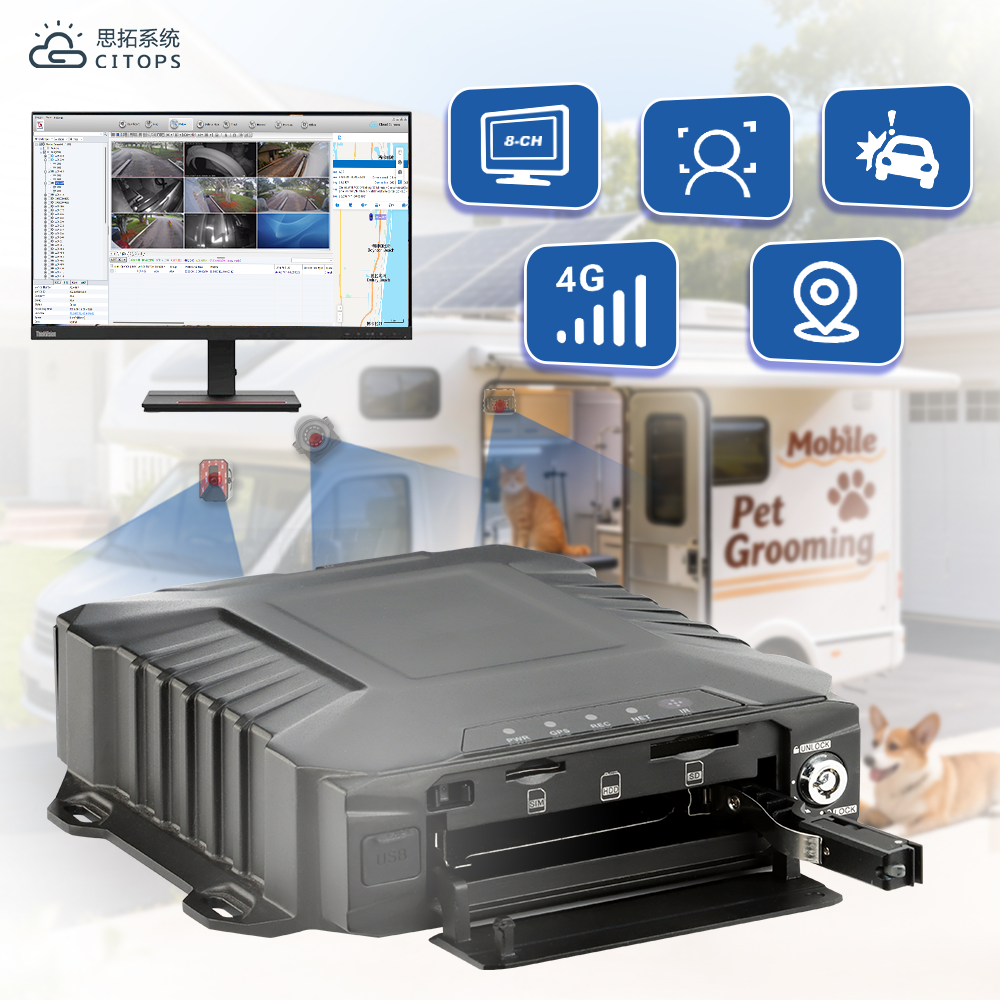
Mount a high-definition camera directly above the grooming table and another on the side, covering the entire working area with automatic low-light compensation. Recording starts from the moment the dog comes on board and continues through the entire process — washing, drying, brushing, and trimming — without interruption.
In the rare event of a dispute, simply pull up the full video footage from that day's session to determine whether the issue was caused by the pet itself or an operational error. Where you're at fault, own it; where you're not, stand your ground. With solid evidence, you handle complaints with much more confidence.
2. On the road — prevent rear-end collisions and driver distraction
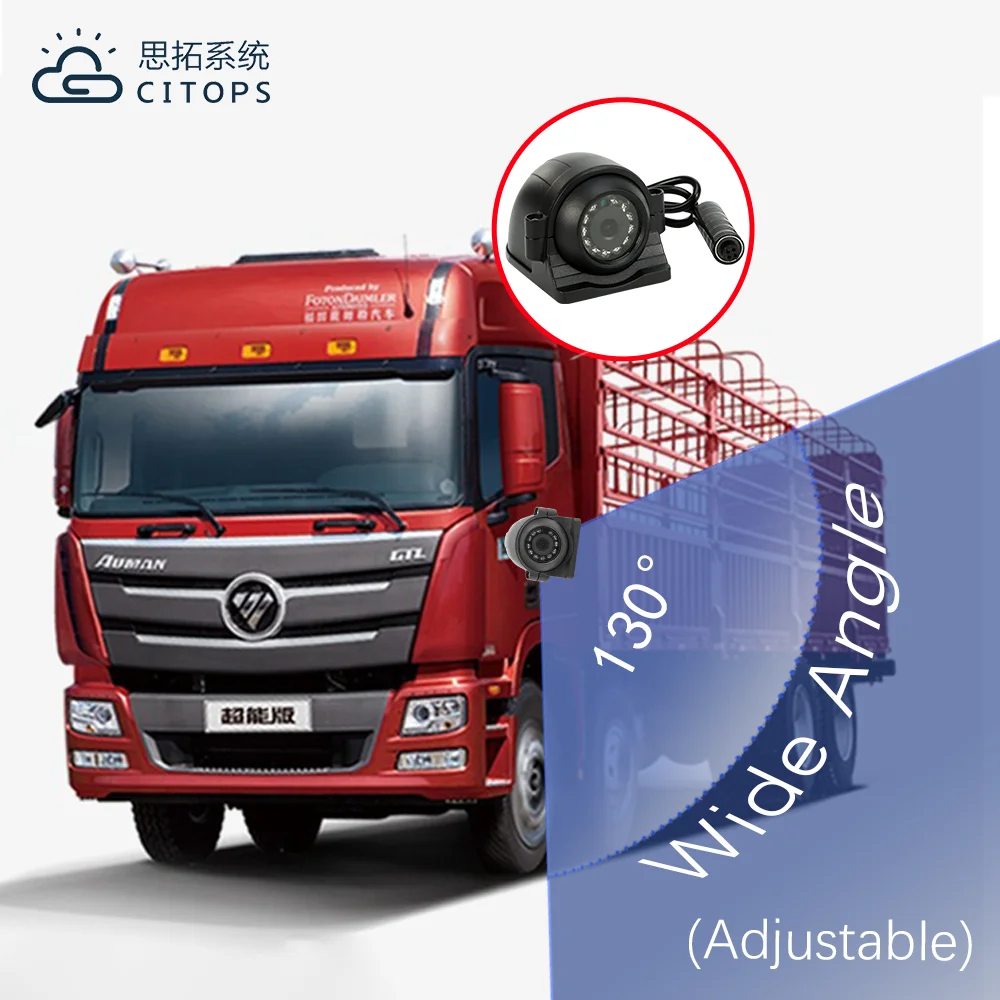
Forward Collision Warning (FCW): Install a millimeter-wave radar or monocular camera at the front of the van to continuously measure the distance to the vehicle ahead and their relative speed. When the gap falls below the safe threshold (e.g., less than 15 meters at 40 km/h), the system triggers an audible alarm. This device is affordable, yet significantly cuts rear-end collision rates.
Driver Fatigue and Distraction Monitoring (DMS): Install a small infrared camera near the steering wheel , focused squarely on the driver's face:
Drowsiness detection: If the system detects drooping eyelids, excessive blinking, or the head staying tilted downward for too long, it immediately broadcasts a voice alert.It also logs fatigue events and pushes notifications to the owner for shift scheduling or rest arrangements.
Phone use detection: If the driver's gaze stays off the road for more than 2 seconds (e.g., looking down at a phone screen), a prompt sounds.
Smoking detection: It can optionally identify smoking gestures and remind "No smoking inside the van" — clients appreciate a smoke-free environment, especially with pets on board.
Weekly driving behavior scorecard: The system automatically generates a simple "Driving Safety Report" each week, listing each van's hard-brake count, close-following alerts, and fatigue/distraction warnings. Owners can sit down with drivers and say, "Lao Wang, you had 12 close-following alerts this week — let's work on that next week." With concrete data, drivers can't make excuses, and safety awareness improves naturally.
3. Backend — see all vans on one map, dispatch without endless calls
Build a simple electronic map that shows each van's real-time location, current status (idle/drive), and remaining water percentage on a map(Optional water level sensor).
To facilitate your command and dispatch of all vehicles
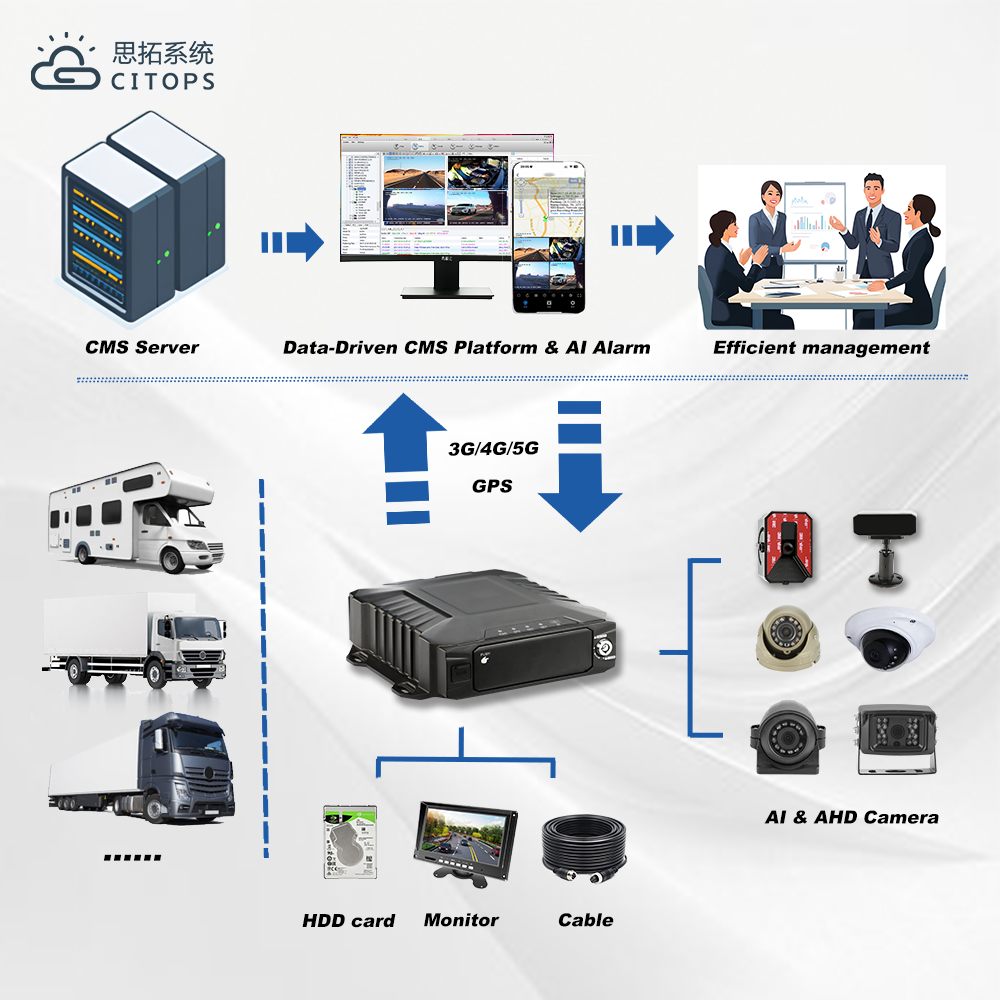

CITOPS delivers cutting-edge in-vehicle video systems with 4G GPS tracking, AI algorithms, and cloud monitoring. Trusted in 120+ countries, we offer customized MDVR solutions for enhanced fleet safety and operational efficiency.
11/F,BlockA,Delux Sci-Tech Park,No.5 Guanle Street, Longhua District,518110,Shenzhen,China.
Copyright © 2026 Shenzhen Citops Systems Co., Ltd. All rights reserved Privacy Policy
粤ICP备 14015289 号