 EN
EN
Quick Links
An MDVR product page explains which functions are available. A sample shows how those functions perform on the buyer's own vehicle. This makes the sample stage valuable for fleet operators, project buyers, distributors and system integrators who plan to purchase the same solution in quantity.
The evaluation begins with a clear operating requirement. The supplier prepares a matching sample, the buyer installs and uses it, and both parties use the results to confirm the configuration for the bulk order.
Start with the business result the fleet expects. This gives the supplier a clear basis for selecting the recorder, cameras, storage and online functions, and it gives the buyer a clear basis for evaluating the sample.
| Fleet requirement | Sample configuration to discuss | Result to verify |
|---|---|---|
| Record road incidents or delivery disputes | Front, rear, side or cargo cameras according to the evidence required | The correct time and camera views can be found, played and exported |
| Improve side and rear visibility | Side and rear cameras positioned for the vehicle body, with an in-cab monitor when required | The driver or reviewer can see the required zones clearly |
| Monitor vehicles remotely | 4G, GPS and platform access configured for the operating country | Authorized users can locate the vehicle and open the required live or recorded view |
| Record the driver or passenger area | A cabin camera, audio setting or DMS option selected for the project | The selected cabin view or alert supports the fleet's management process |
| Keep video for a defined period | Storage capacity and recording settings based on the required hours or days | The sample retains video for the planned operating period |
| Use safety alerts | The selected ADAS, DMS, BSD or vehicle-input functions | The purchased alert reaches the intended user with usable supporting video |
Choose a vehicle that represents the planned installation. For a fleet with several vehicle bodies, select the most common type first or the vehicle with the most demanding camera coverage. Share the vehicle dimensions or photos when camera positions and cable lengths depend on the body layout.
Provide the supplier with six details: vehicle type, expected bulk quantity, areas that must be visible, required recording time, remote-monitoring functions, and the country where the system will operate.
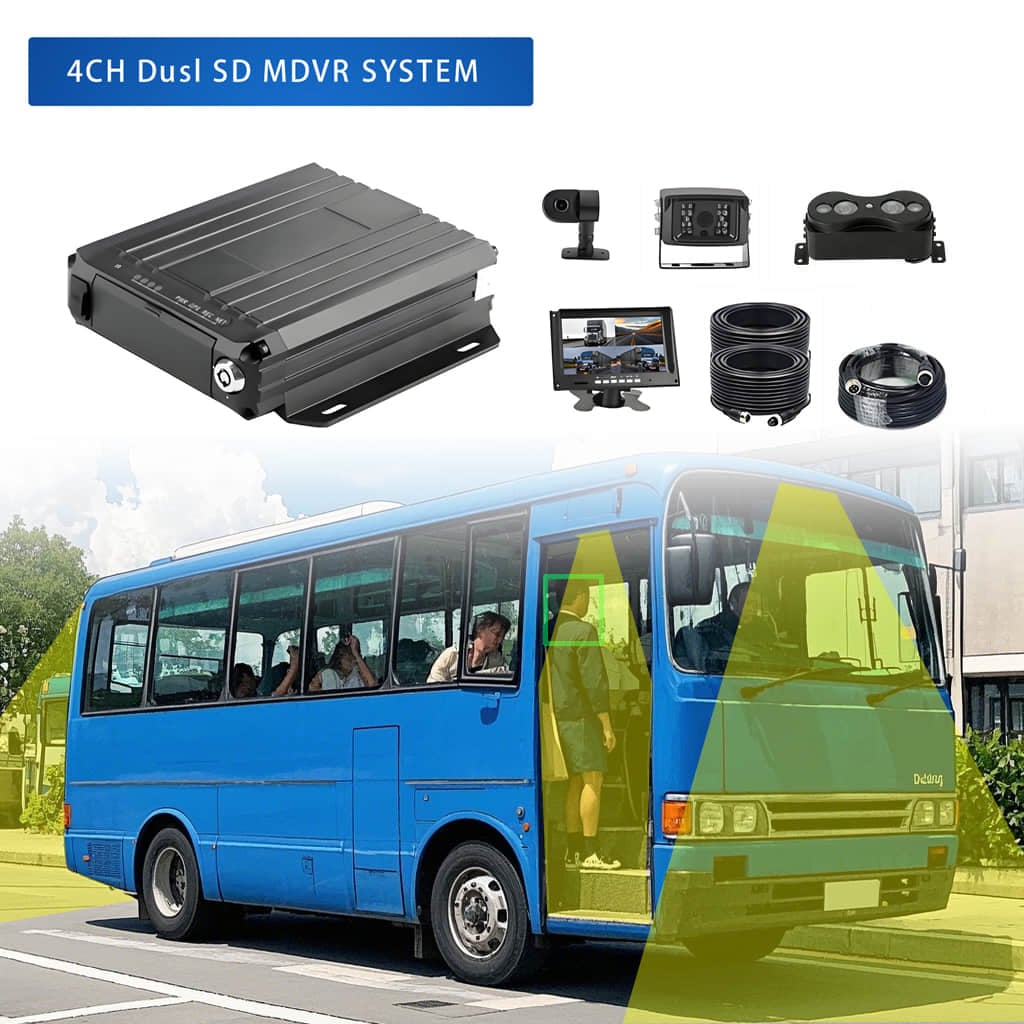
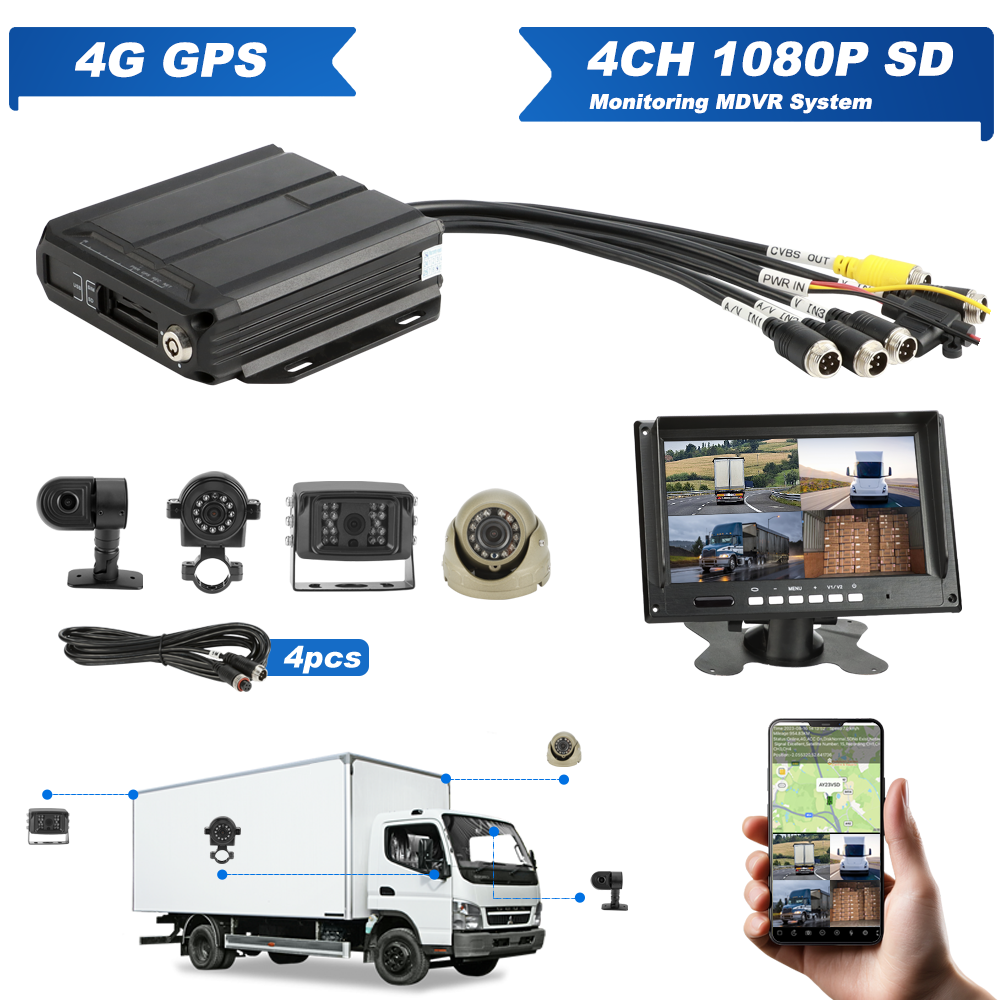
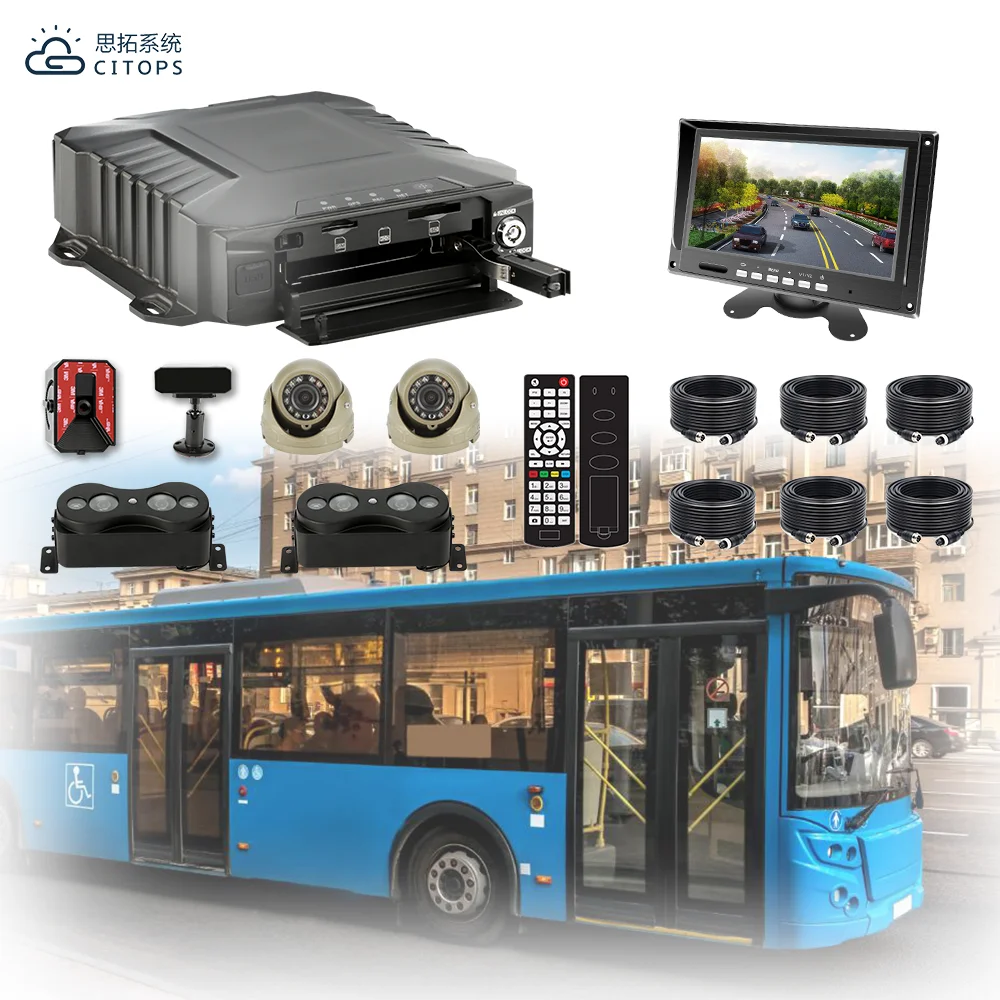
The CITOPS four-channel MDVR sample configuration provides a starting reference for a recorder, cameras, monitor and cables. CITOPS can adjust the camera mix, storage and connectivity options according to the project requirement.
Install the recorder, cameras, antennas and storage in the same positions intended for the fleet rollout. View all camera channels together and confirm that the selected mounting points provide the required coverage. Check cable routes, brackets and recorder location so the final installation can be repeated across similar vehicles.
Keep a simple camera map and a list of the sample components. These records help the buyer review the results and give the installation team a clear reference for the bulk deployment.
Drive or position the vehicle in the locations where the system will be used. Review the front road, cabin, doors, cargo, sides and rear according to the project camera map. The sample should show the people, objects and vehicle zones that matter to the buyer.
Record a representative daytime route and the lighting conditions relevant to the project. Fleets that operate after dark should also review night footage. Check the saved recording during movement, stops, shade, headlights and loading areas.
Mark the time of an ordinary event such as a depot arrival, loading stop, door opening or walk-around. Ask the intended user to locate the vehicle, time and camera channels, play the footage and export a clip. This shows whether the system can support later incident review and customer or insurance evidence.
Compare actual recording use with the number of hours or days required by the fleet. A transparent planning estimate for continuous recording is:
Compression, frame rate, image activity, audio and reserved capacity affect actual storage use. The sample recording provides the most relevant basis for the final capacity decision. Projects requiring longer retention can discuss a configuration such as the CITOPS M32 SD/SSD MDVR.
Use the vehicle through its normal start, route and shutdown cycle. Confirm that recording begins as expected, the selected shutdown delay works, settings remain available, and saved video can be reviewed after the trip.
For a remote-monitoring project, use the intended cellular network and platform accounts. Confirm vehicle location, route history, live view, remote playback and user permissions according to the buyer's workflow.
Check the functions included in the proposed solution, such as a panic button, door input, ADAS, DMS or BSD alert. Use appropriate safe conditions and supplier guidance, then confirm that the intended person receives the alert together with the required time, location or video evidence.
The sample is successful when it proves that the selected system can solve the fleet requirement and that the intended users can operate it. The following decision table keeps the review connected to the purchase goal.
| Purchase goal | Evidence from the sample | Ready signal |
|---|---|---|
| Useful incident evidence | A marked moment from a normal route can be found and exported from all relevant channels | Supervisors can retrieve a complete clip without supplier assistance |
| Camera coverage | The installed sample shows every road, cabin, door, cargo, side or rear zone required by the project | The camera map answers the original coverage requirement |
| Recording retention | Actual recording use is compared with the target number of hours or days | Storage is suitable or the required upgrade is clear |
| Remote fleet visibility | The target-country SIM, GPS route, live view and user permissions are used during the sample period | The fleet team can complete its normal remote-monitoring tasks |
| Selected alarms or AI functions | Each purchased function produces the expected alert and associated evidence under an appropriate test scenario | The alert supports a defined fleet action |
Sample feedback may lead to a better camera angle, a different cable length, more storage, revised user permissions or adjusted alert settings. Apply the agreed change and check the affected function again. The confirmed result becomes the reference for the final solution.
When the vehicle layout or operating requirement differs significantly across the fleet, prepare an additional configuration for that vehicle group. This keeps each bulk package connected to a proven installation.
Once the sample meets the buyer's requirements, record the final configuration in the quotation or order confirmation. This gives purchasing, installation and support teams one clear reference for the rollout.
| Item | Details to confirm for the bulk order |
|---|---|
| Recorder | Model, channel count, storage type and selected GPS/4G/Wi-Fi options |
| Cameras | Quantity, camera type, viewing angle, night requirement and mounting position |
| Storage | Media type, capacity, recording settings and expected retention |
| Connectivity | Operating country, cellular bands, SIM/APN responsibility and remote-view requirement |
| Platform | Web/app access, user accounts, service term and required permissions |
| Installation kit | Power cable, camera cables, antennas, brackets, monitor and selected accessories |
| Order terms | Bulk quantity, lead time, warranty, documentation and technical-support contact |
CITOPS can recommend a sample based on the vehicle type, camera coverage, storage target, operating country and platform requirements. After the sample is installed, the buyer can share footage, installation feedback and function results with the CITOPS team to refine the final solution.
This process helps the buyer purchase a system that has already demonstrated value on the intended vehicle and gives CITOPS the information required to prepare a more accurate bulk configuration.
Send CITOPS your vehicle type, fleet quantity, required camera views, recording time, remote functions and operating country. The team can recommend the recorder, cameras, storage, cables and platform option for a sample order.
Review the CITOPS four-channel MDVR sample page or contact CITOPS to begin the sample selection. After the required functions are verified on the vehicle, CITOPS can confirm the corresponding bulk solution.
Q: Why should a buyer purchase an MDVR sample before a bulk order?
A: A sample connects the product specification to the buyer's own vehicle. It shows whether the selected cameras, recorder, storage and online functions can solve the intended operating requirement before the same configuration is deployed across the fleet.
Q: Which MDVR functions should be tested?
A: Test the functions included in the proposed solution. Most projects should verify camera coverage, recorded video, search and export, storage duration and vehicle startup behavior. Projects with remote monitoring should also verify 4G, GPS, platform access and user permissions. Selected alarms or AI functions should be checked when they are part of the purchase.
Q: How long should an MDVR sample be used?
A: Use it long enough to cover the normal conditions that affect the decision: representative routes, typical vehicle starts and stops, the required lighting conditions, the planned network environment and at least one complete video-retrieval exercise by the intended user.
Q: Does the test require a real traffic incident?
A: A normal journey provides suitable test material. Mark the time of a depot arrival, loading stop, door opening or walk-around, then retrieve and export that footage. Purchased buttons, inputs or alerts can be checked under appropriate safe conditions and supplier guidance.
Q: What happens when the first sample needs adjustment?
A: The buyer and supplier can refine camera position, cable length, storage capacity, recording settings, platform permissions or alert configuration. The updated sample is then checked against the same business requirement before the bulk configuration is confirmed.
Q: What should be confirmed before the bulk order?
A: Confirm the recorder, cameras, storage, connectivity, platform service, accessories, installation information, quantity, lead time, warranty and support terms used for the approved sample solution.
Product options vary by model and order. Confirm the final recorder, cameras, storage, connectivity, platform service and accessories in the quotation before purchase.
 Hot News
2026-09-24
2026-09-16
2026-09-11
2026-09-04
2026-08-28
2026-08-14

CITOPS delivers cutting-edge in-vehicle video systems with 4G GPS tracking, AI algorithms, and cloud monitoring. Trusted in 120+ countries, we offer customized MDVR solutions for enhanced fleet safety and operational efficiency.
11/F,BlockA,Delux Sci-Tech Park,No.5 Guanle Street, Longhua District,518110,Shenzhen,China.
Copyright © 2026 Shenzhen Citops Systems Co., Ltd. All rights reserved Privacy Policy
粤ICP备 14015289 号