 EN
EN
Quick Links
Construction sites combine large machines, workers on foot, reversing movements, dust, vibration and changing work areas. The buying question is not simply whether a camera is waterproof. The buyer must identify which blind areas and operational events require visibility, then select cameras, recorder, monitor, storage and connectivity that can work on the specific machine.
OSHA defines a backover incident as a backing vehicle striking a worker behind it and notes that blind areas around vehicles may not be obvious to workers on foot. Camera systems can support visibility and incident review, but they do not replace site traffic controls, spotters, alarms, training or required procedures.
An excavator, articulated dump truck, rigid dump truck and loader have different body shapes, movement patterns and mounting points. Create a top and side drawing of the machine. Mark where the operator cannot see directly or through mirrors, where people work on foot and where material blocks the view during loading or dumping.
| Machine or task | Typical visibility question | Camera design to discuss |
|---|---|---|
| Dump truck reversing | Can the operator see the rear path and workers near both rear corners? | Rear plus side views where the blind-area map requires them |
| Excavator slewing | Can the operator see the counterweight side and surrounding work zone? | Rear or side cameras positioned for the actual rotation and boom layout |
| Loader or haul vehicle | Are workers or obstacles hidden near the front, side or rear? | Views selected from the machine-specific blind-area drawing |
| Loading and dumping | Can supervisors review material movement or a dispute? | Operational view plus synchronized time and location when required |
| Remote equipment supervision | Where is the machine and is selected video available? | GPS and optional 4G platform access |
OSHA's backing-safety guidance states that some dump trucks may require two or three cameras to monitor front, rear and side blind spots. The correct number depends on the specific truck and mounting position. A camera image should support the operator's task without blocking the windshield view or creating a monitor layout that is too small to use.
The site should still follow its required backup alarm, spotter, communication, exclusion-zone and traffic-control procedures. The camera adds visibility and evidence; it is not permission to remove other controls.
| Site condition | What can go wrong | What the buyer should confirm |
|---|---|---|
| Vibration and shock | Loose connectors, unstable image or storage interruption | Vehicle-rated connectors, secure mounting and recorder/storage design |
| Dust, mud and water | Lens obstruction, corrosion or damaged exposed equipment | Camera and recorder protection rating, mounting shelter and cleaning access |
| Temperature | Startup, recording or storage problems | Published operating range for every quoted component |
| Low light and glare | People or obstacles are difficult to distinguish | Representative day, night, headlight and shadow footage |
| Long cable routes | Voltage drop, damage or unreliable video | Cable type, length, protection and connection plan |
| Weak mobile coverage | Remote video is unavailable | Local recording behavior and later retrieval during network loss |
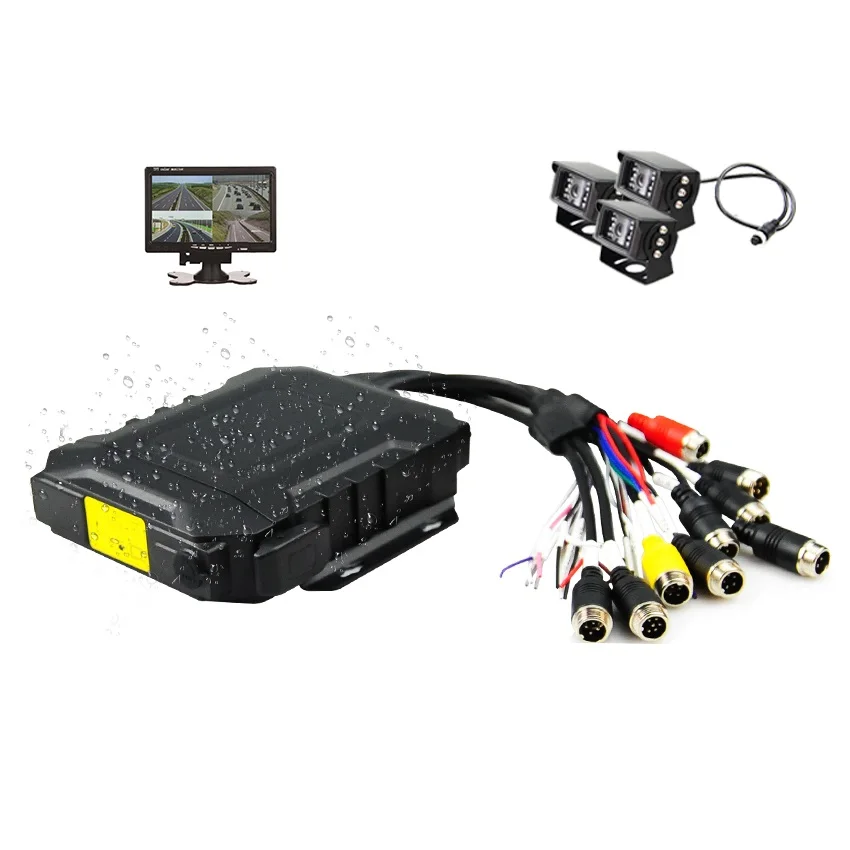
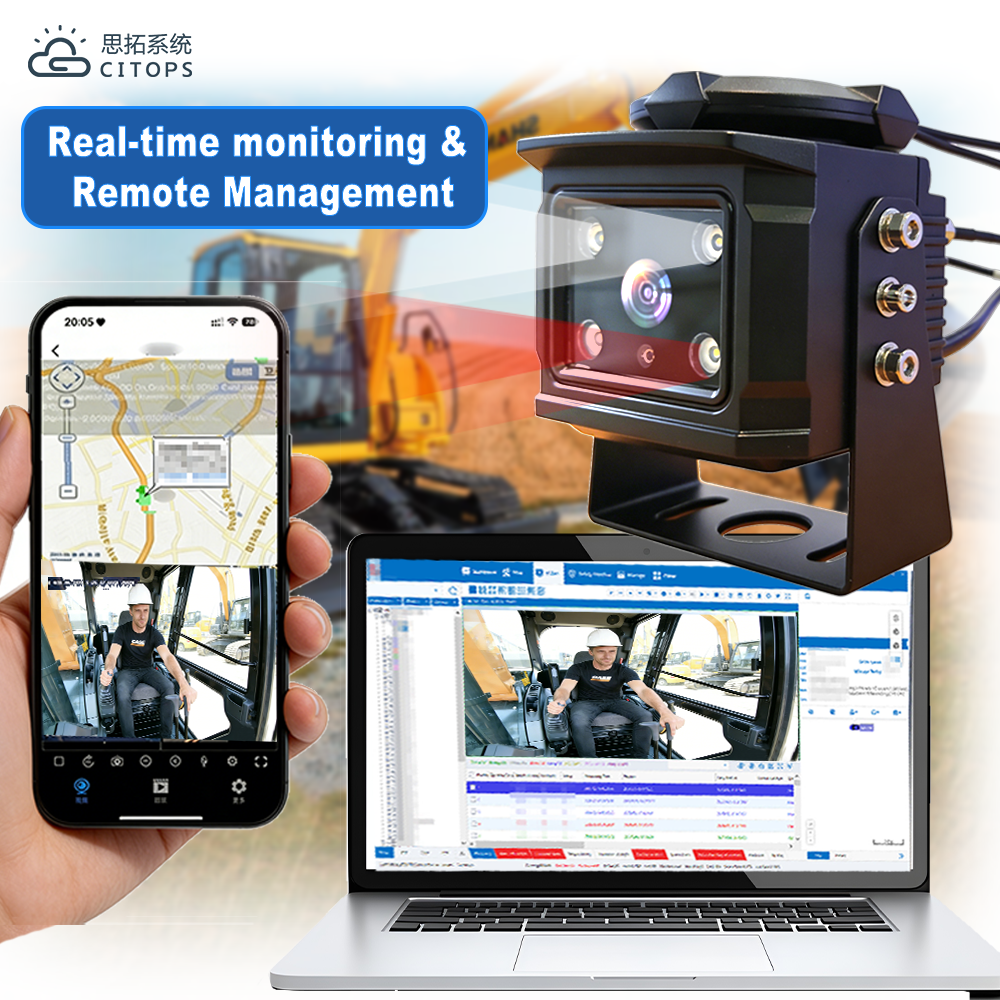
The CITOPS construction vehicle monitoring system combines recording, storage, GPS and 4G remote access in one camera product. It can suit a project that needs a focused view, simple installation and remote location or video without a separate multi-channel recorder. The product page states that sample orders and customization are available.
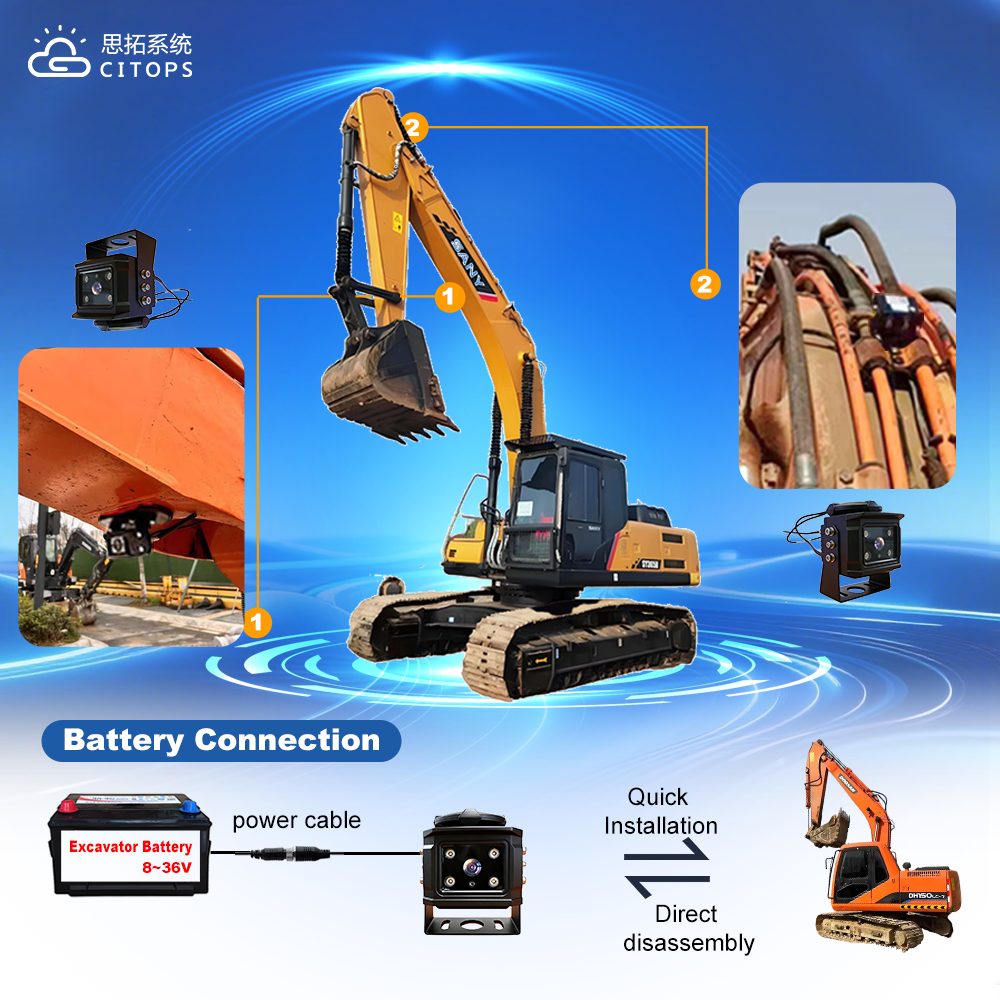
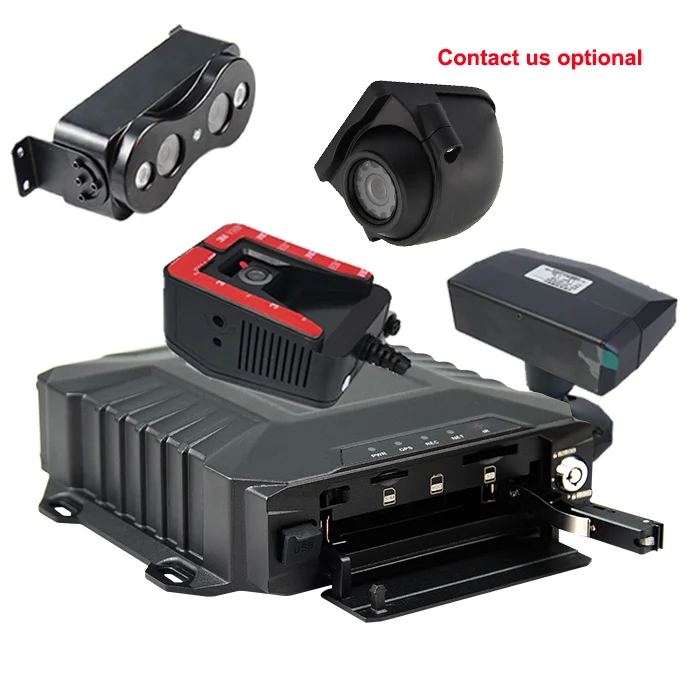
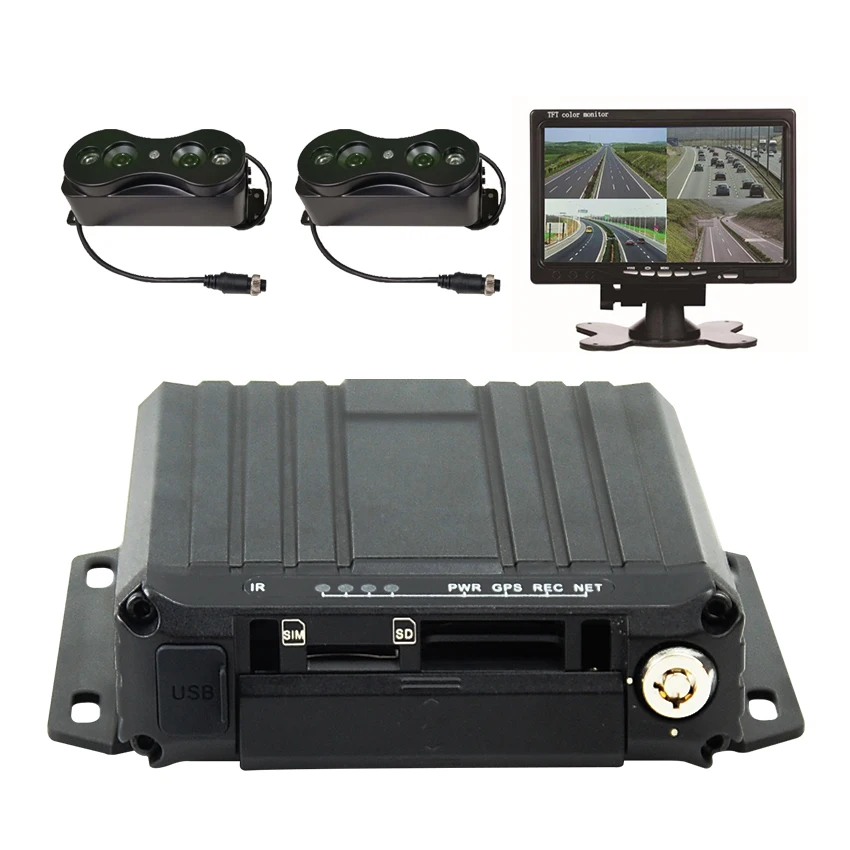
A multi-camera project needs a separate recorder. The CITOPS M32Hv SD and SSD MDVR is a relevant starting point for four independent AHD views and larger local storage. CITOPS product and internal specification materials describe SD plus SSD options, 4G and GPS options and an IP66 recorder housing. Confirm the exact model, interfaces, storage and protection level in the quotation.
Choose between the two architectures from the required views and workflow. A focused excavator monitoring project may be satisfied by one integrated device. A dump truck that needs front, both sides and rear evidence needs a multi-camera recorder even if an all-in-one product is easier to install.
Local recording should continue when 4G coverage is weak or unavailable. Define which remote tasks are essential: location, selected live view, event upload, playback or device status. Ask what happens during loss of coverage and whether the user can retrieve the full-quality local recording afterward.
Storage should reflect operating hours, number of channels, recording settings and the time normally required to report an incident. If the recorder is mounted where it is difficult to access, include the service and retrieval process in the design.
Purchase one complete sample for each substantially different machine type. Install it with the proposed brackets, cables, monitor, antennas and storage. A bench demonstration cannot show whether the final camera position remains useful when the machine is loaded, slewing, reversing or covered with dust.
If mud blocks the view, vibration changes the angle or a cable route is exposed, improve the mounting and test again. The final bill of materials should include those installation details rather than listing only the recorder and cameras.

Record the machine type, camera positions, bracket design, cable lengths, recorder and storage, power connection, monitor layout, 4G and GPS modules, platform settings and maintenance instructions. If excavators and dump trucks use different layouts, keep separate approved configurations for each group.
Send CITOPS the machine type and photos, fleet quantity, blind-area drawing, required views, operating hours, site environment, retention target, operating country and remote platform needs. Contact CITOPS for an all-in-one or multi-camera recommendation, sample bill of materials and installation review.

Q: How many cameras does a dump truck need?
A: The number depends on the truck's blind-area map and the views required by the operator and safety team. OSHA notes that some dump trucks may require two or three cameras for front, rear and side blind spots; other projects may require more recorded views.
Q: Can cameras replace a spotter or backup alarm?
A: Do not assume so. Cameras support visibility and evidence, while site rules and applicable regulations may still require alarms, spotters, traffic controls, communication and training. Confirm the site's safety requirements separately.
Q: What protection rating should a construction MDVR have?
A: Choose from the mounting location and exposure to dust, water and impact. Confirm the published rating for the exact recorder and cameras in the quotation; a protected recorder does not make every connector, camera or cable equally protected.
Q: Will the system record when 4G is unavailable?
A: A correctly configured MDVR should use local storage independently of 4G, but the exact behavior must be confirmed on the quoted model. Test local recording and later retrieval in a known weak-network area.
Q: Is an all-in-one 4G camera enough for an excavator?
A: It can be enough when the project needs one focused view, local recording, GPS and remote access. If several independent blind areas must be visible or recorded, use a multi-camera MDVR.
Q: What should be approved before a bulk construction fleet order?
A: Approve the machine-specific camera map, brackets, cable protection, recorder, storage, monitor, power connection, connectivity, platform functions, maintenance process, warranty and sample test results.
Product functions and specifications vary by model, market and final bill of materials. Confirm the exact recorder, cameras, storage, connectivity, software service and accessories in the quotation before purchase.
 Hot News
2026-09-24
2026-09-16
2026-09-11
2026-09-04
2026-08-28
2026-08-14

CITOPS delivers cutting-edge in-vehicle video systems with 4G GPS tracking, AI algorithms, and cloud monitoring. Trusted in 120+ countries, we offer customized MDVR solutions for enhanced fleet safety and operational efficiency.
11/F,BlockA,Delux Sci-Tech Park,No.5 Guanle Street, Longhua District,518110,Shenzhen,China.
Copyright © 2026 Shenzhen Citops Systems Co., Ltd. All rights reserved Privacy Policy
粤ICP备 14015289 号