 EN
EN
Quick Links
A recorder with more channels is not automatically the better system. Unused inputs add cost and installation complexity; too few inputs leave blind spots that cannot be repaired after an incident. The correct decision starts with a camera map, not a product catalogue.
This guide shows how to translate operational risks into camera views, compare four- and eight-channel architectures, and avoid hidden storage or bandwidth problems. It also explains where hybrid AHD and IP inputs can affect the final count.
One channel normally represents one camera stream connected to the recorder. It does not guarantee a particular resolution, frame rate, night image, viewing angle or analytics function. Those values must be verified for simultaneous recording, because a recorder may support different combinations at different settings.
For the wider context—recording, GPS, connectivity, alarms and platform use—see the MDVR system and fleet-management guide. Channel count is only one layer of that complete system.
| Factor | 4-channel MDVR | 8-channel MDVR |
|---|---|---|
| Typical camera map | Four required views, for example front + rear + left + right, or front + driver + rear + cargo/door | Five to eight required views, for example front + driver + left + right + rear + doors, cabin or cargo |
| Best fit | Any vehicle whose essential camera map fits within four inputs; vehicle size alone is not the deciding factor | Any vehicle that needs five to eight separate views at the same time |
| Installation | Usually fewer cameras, cables and mounting points | More camera locations and cable routing; the installation plan should identify every channel |
| Side-zone coverage | Can cover both sides when the other two inputs are assigned to the fleet's remaining priorities | Useful when left and right views are needed in addition to driver, cabin, doors, cargo or other zones |
| Storage demand | Based on the number of active cameras and their recording settings | Higher only when more cameras are recording; unused inputs do not create video data |
| Live view and data | Fewer active streams are simpler to view and upload | More active streams require clear channel names and sensible live-view settings |
| Expansion room | No spare input after four cameras are connected | Spare inputs are useful only when future camera positions and compatibility are confirmed |
| Buying risk | Trying to make one camera cover two views that need separate detail | Paying for unused inputs or assuming 8CH means better image quality |
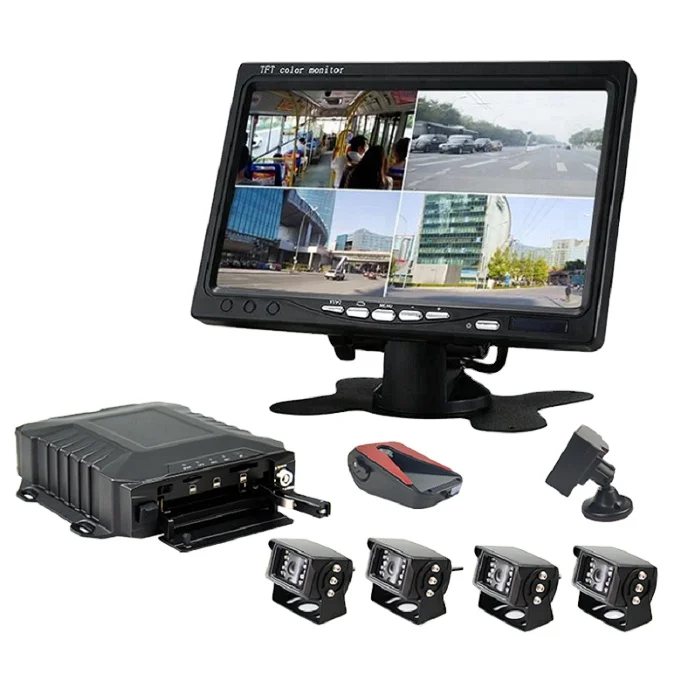
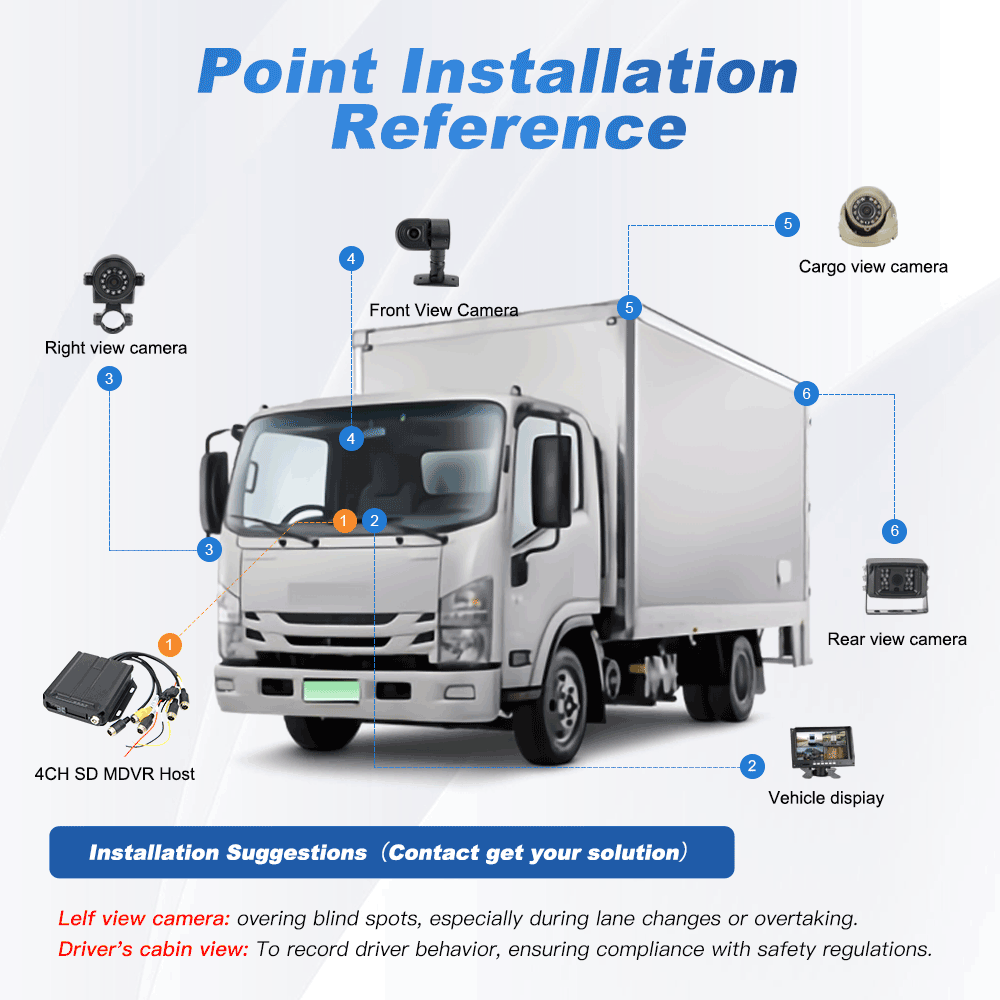
Four channels are often effective for a compact or medium single-body vehicle with a simple operational risk profile. A common map is front road, driver/cabin, rear and cargo or side. Alternatives include two side cameras instead of a cabin view, or a passenger/cargo view instead of the driver view, depending on policy and use case.
A four-channel system is not limited to one side view. It can cover front, rear, left and right if those are the fleet's four priorities. The limitation appears when the buyer also needs a separate driver/cabin, door, cargo or work-area view. Move to 8CH when the number of required independent views exceeds four—not simply because the vehicle has two side blind zones.
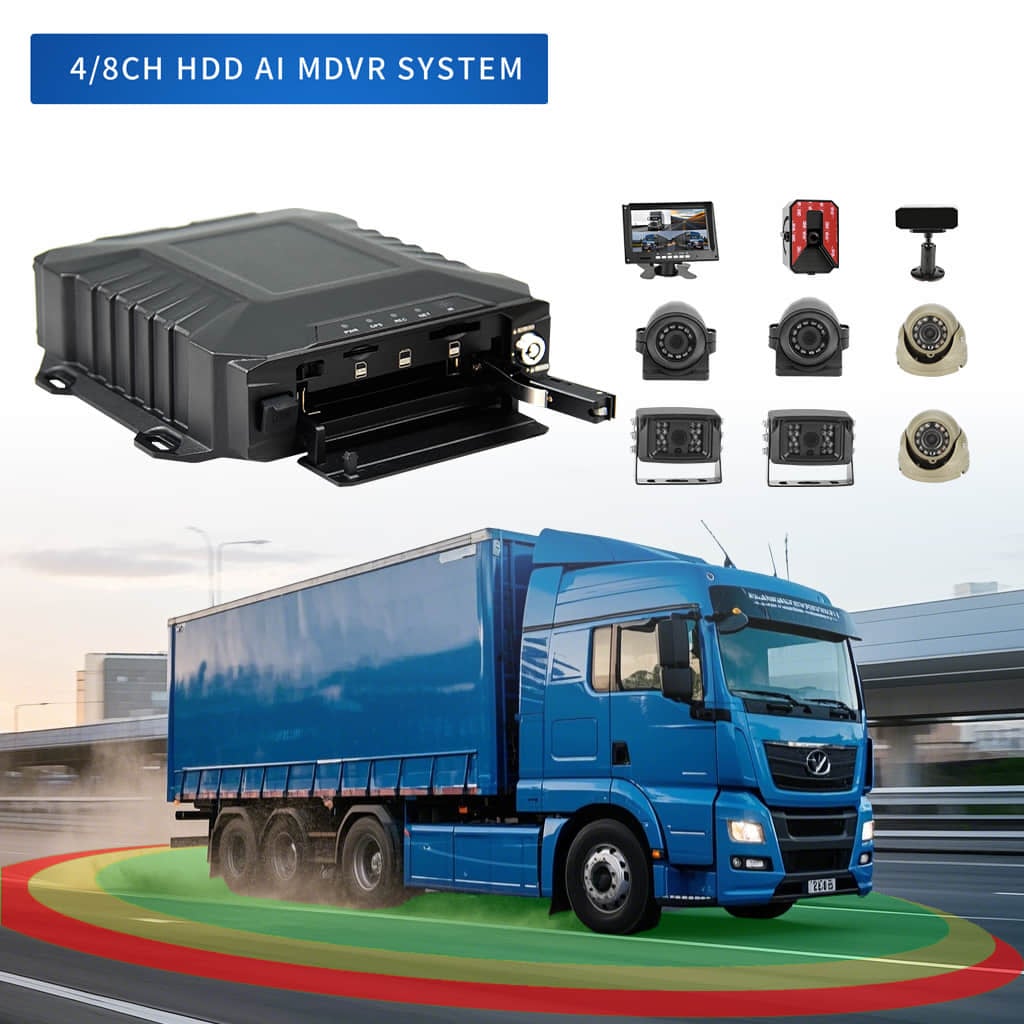
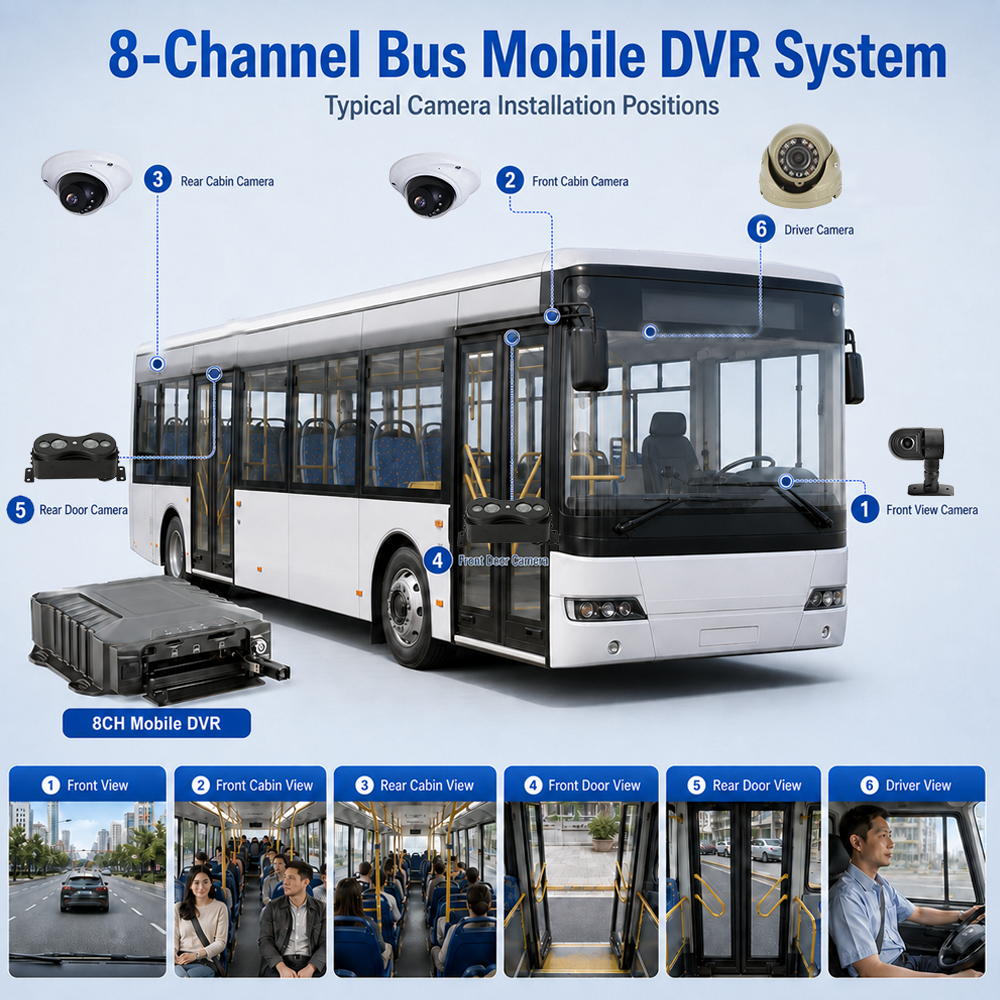
Eight channels make sense when the vehicle has more physical zones or more stakeholders. A passenger bus may need road, driver, front door, rear door, aisle, left, right and rear views. A large service vehicle may need road, driver, both sides, rear, interior workspace, equipment compartment and a spare or AI-specific camera.
Storage depends on the combined bitrate of all recorded streams, recording hours, retention days and storage overhead. A planning estimate is:
For illustration, if each channel averages 2 Mb/s and records 12 hours per day, four channels generate about 43.2 GB per day and eight channels about 86.4 GB before overhead. Over 30 recording days, that is approximately 1.30 TB versus 2.59 TB. Actual bitrate varies with codec, resolution, frame rate, scene complexity, audio and recording mode, so verify the estimate with sample footage from the target vehicle.
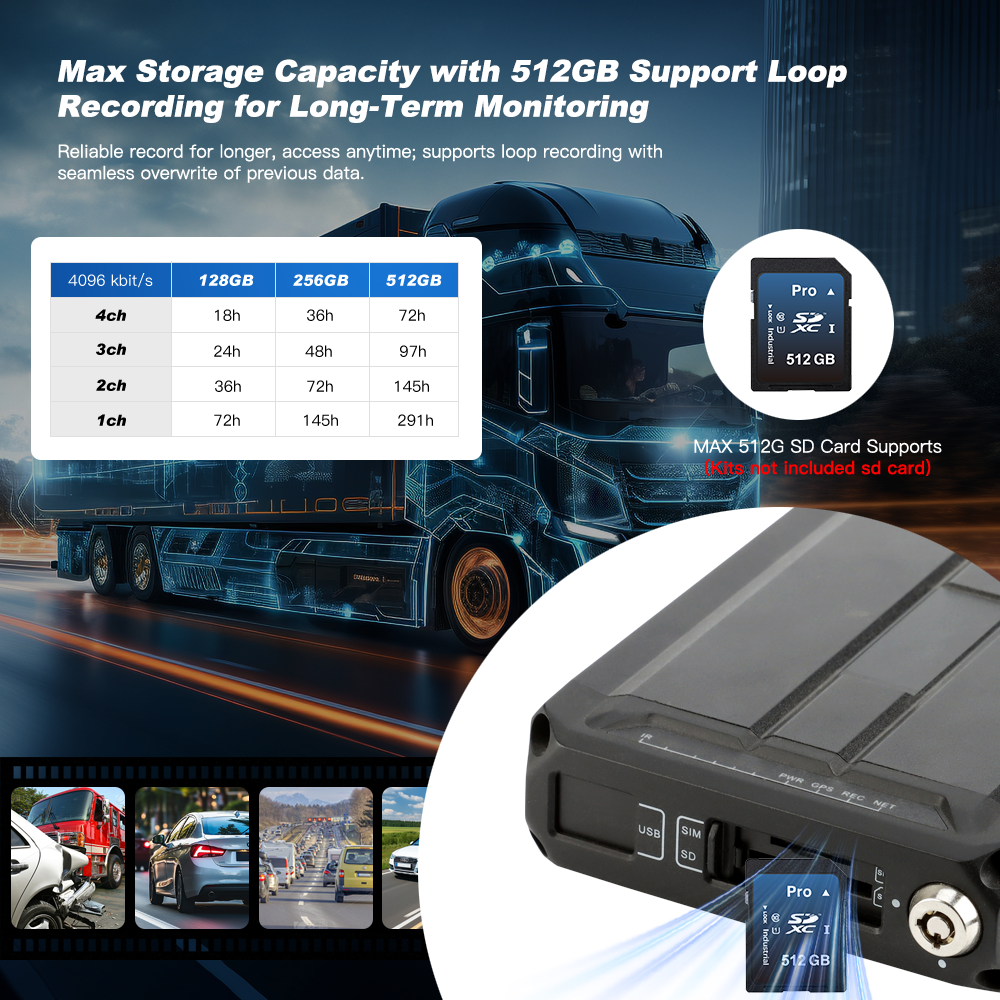
Most fleets should not stream every full-resolution channel continuously over cellular. A practical design uses lower-bitrate sub-streams for live view, uploads selected event clips, and retrieves full-quality evidence when needed. With eight channels, user permissions, channel naming, multi-view layouts and device health monitoring become more important because supervisors have more streams to navigate.
Some mobile DVRs combine analog high-definition (AHD) and IP camera inputs. This can be useful when rugged AHD cameras cover most vehicle zones while an IP camera serves a specialized position. But buyers must distinguish physical connectors, licensed IP channels and the total simultaneous decoding/recording limit. “4CH + IPC” can mean different things across models, so the final topology should be written into the BOM and test plan.
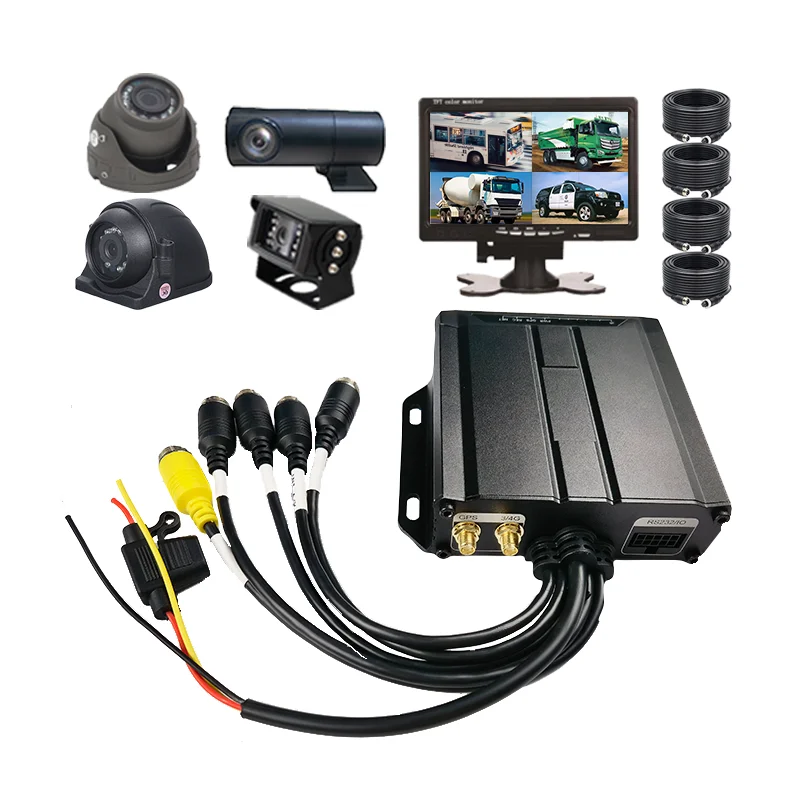
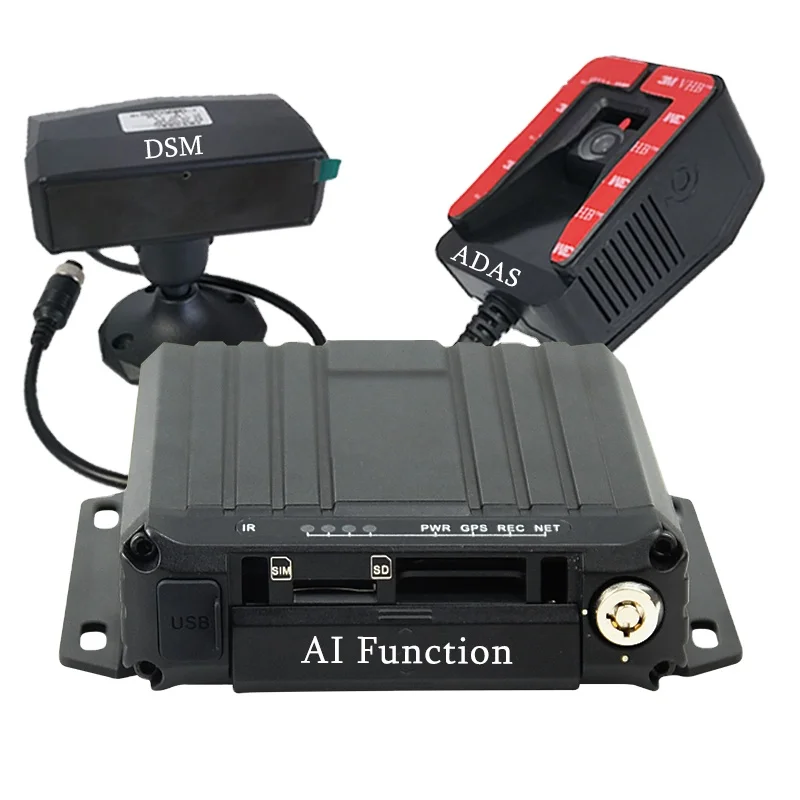
The CITOPS M16Hv four-channel MDVR page describes four-channel 1080p AHD recording, scalable IP camera support, H.264/H.265, dual SD storage and connectivity options including 4G, Wi-Fi and GPS. The CITOPS M52A hybrid configuration can combine AHD inputs, dedicated ADAS and DMS cameras and IP cameras. The CITOPS eight-channel AI MDVR page shows a multi-camera configuration for larger service vehicles. Final capabilities depend on the ordered version.
| Decision point | 4-channel is suitable when | 8-channel is suitable when |
|---|---|---|
| Required views at launch | Four or fewer independent camera views | Five to eight independent camera views |
| Left and right side coverage | Both sides can be included if the other two inputs cover the remaining priorities | Both sides are needed together with driver/cabin, doors, cargo or other views |
| Driver, cabin, doors and cargo | The complete camera map still totals four or fewer | Adding these views takes the total above four |
| Dedicated AI cameras | They do not add an extra recorder input, or the total remains four or fewer | Dedicated ADAS, DMS or BSD cameras increase the total to five or more |
| Near-term expansion | No confirmed additional camera, or the approved total remains four | Named, compatible future cameras bring the approved total to five to eight |
| Reason for choosing the recorder | Every required view fits without making one camera cover unrelated zones | Each required view has its own input; extra channels are not being bought only 'just in case' |
Often yes, but confirm the model’s input rules and whether unused channels affect any license or platform settings. An eight-channel recorder can provide expansion room when the future camera plan is real.
No. Channel count and image quality are separate. Compare per-channel resolution, frame rate, codec, lens, sensor, low-light performance and simultaneous recording limits.
It depends on length, doors, passenger areas, exterior blind zones and policy. Many buses need more than four views, but the correct count comes from a vehicle-specific camera map.
It may cover a wider scene, but detail and perspective can suffer. Test whether faces, license plates, door activity or side objects remain identifiable at the required distance.
Only after confirming the recorder can support the intended AI cameras, firmware and platform license. A spare physical input alone does not guarantee future analytics.
Send CITOPS a simple camera map for each vehicle type, along with target recording hours, retention days, operating country and required remote functions. Ask for both a four-channel and eight-channel BOM only when both maps meet the same evidence requirements; otherwise compare complete solutions, not recorder prices.
Use the CITOPS M16Hv four-channel MDVR and the CITOPS eight-channel AI MDVR as configuration references, then request a single signed BOM for the selected camera map.

 Hot News
2026-09-24
2026-09-16
2026-09-11
2026-09-04
2026-08-28
2026-08-14

CITOPS delivers cutting-edge in-vehicle video systems with 4G GPS tracking, AI algorithms, and cloud monitoring. Trusted in 120+ countries, we offer customized MDVR solutions for enhanced fleet safety and operational efficiency.
11/F,BlockA,Delux Sci-Tech Park,No.5 Guanle Street, Longhua District,518110,Shenzhen,China.
Copyright © 2026 Shenzhen Citops Systems Co., Ltd. All rights reserved Privacy Policy
粤ICP备 14015289 号