 EN
EN
Quick Links
A school bus camera system serves several users: the driver needs visibility around the vehicle, the operator needs reliable trip records, the school may need to investigate complaints, and authorized managers may need location or remote video. One camera cannot answer all of those questions. The design begins with a map of the road, passenger and exterior areas that must be seen.
The CITOPS school bus safety monitoring system provides an application starting point. This guide focuses on the buying decisions that determine camera coverage, channel count, storage, alerts, privacy and sample approval.
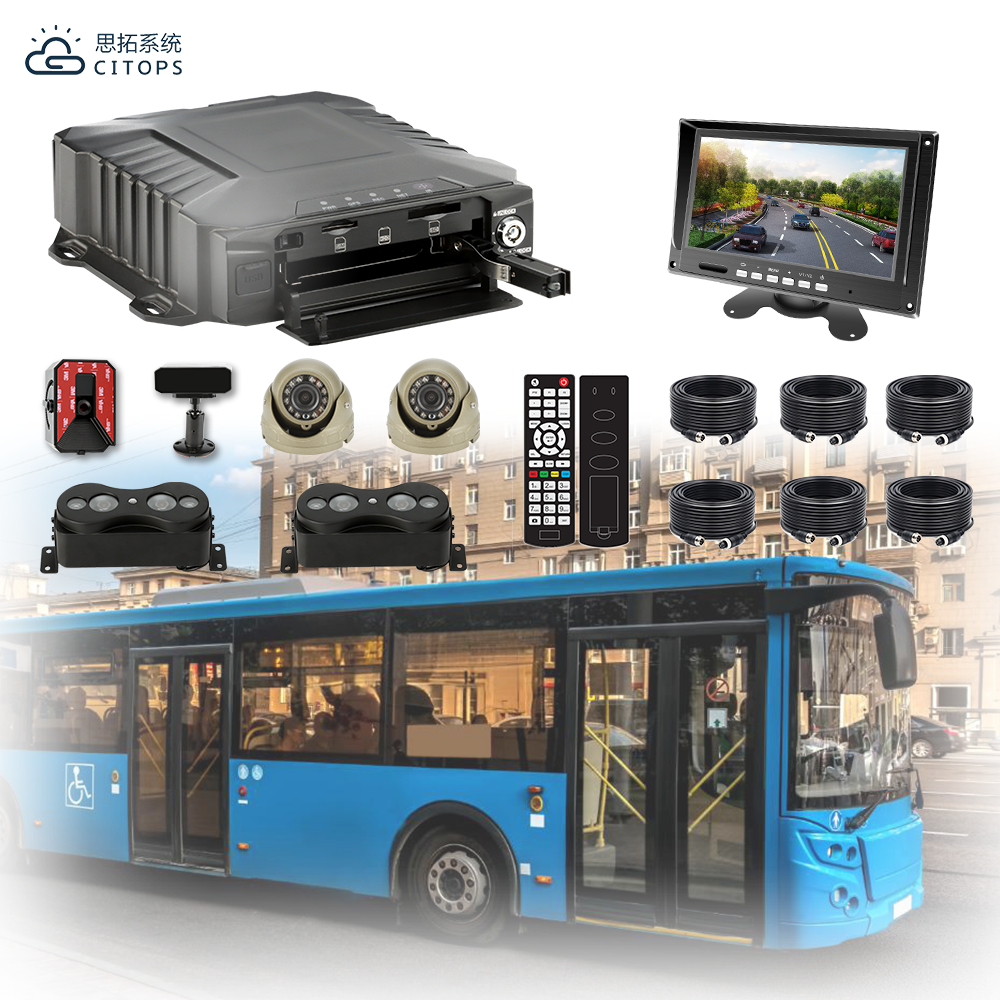
Separate the route into driving, boarding, passenger transport and unloading. For each moment, identify which view would help the operator confirm what happened and who is allowed to review it.
| Operating moment | Useful view | What the buyer should verify |
|---|---|---|
| Driving on route | Front road and driver area | Road context, driver actions and synchronized time and GPS |
| Boarding and unloading | Entrance door plus curb or exterior loading zone | Passenger movement at the door and the relevant area outside the bus |
| Passenger journey | Cabin views selected for the bus length and seating layout | Clear coverage without large gaps between rows |
| Reversing or depot movement | Rear and selected side views | Driver visibility on the monitor and recorded evidence |
| Emergency or complaint review | Relevant channels linked by the same time | Authorized staff can find and export the complete sequence |
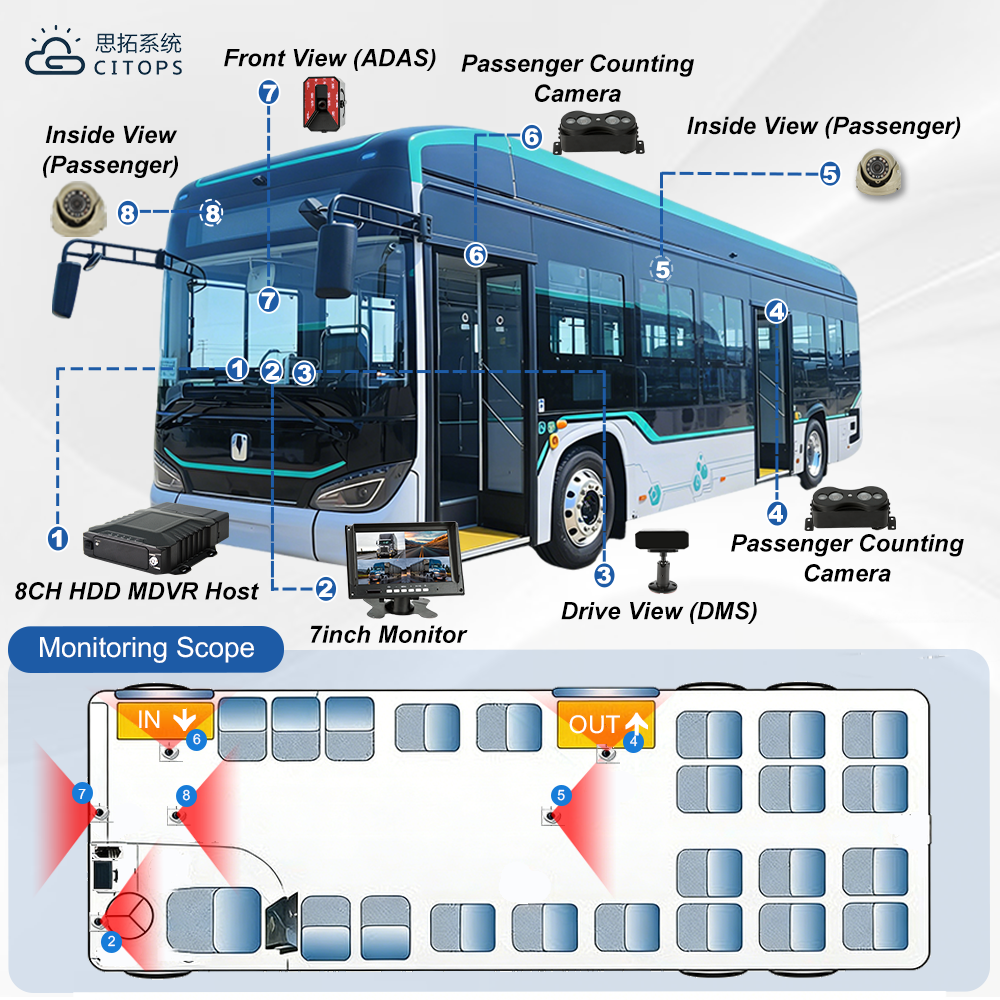
A small bus with a limited coverage requirement may use four independent views. A full-size school bus often needs more because the entrance, long passenger cabin, rear or emergency door and exterior zones must be recorded separately. An eight-channel recorder is appropriate only when the camera map requires those inputs; it is not automatically the correct choice for every bus.
Ask the supplier to place every proposed camera on a bus diagram. The drawing should show the viewing direction, cable route and recorder channel. This makes it easy to find a missing zone before installation.
| Camera position | Primary job | Buying consideration |
|---|---|---|
| Front road | Record traffic, route and incidents ahead | Windshield reflections, night lighting and road detail |
| Driver | Record the driver area or support selected DMS functions | Camera angle, infrared image and access policy |
| Entrance door | Record boarding, unloading and door activity | Door opening, backlight and passenger height range |
| Passenger cabin | Record the aisle and seating zones | Bus length, seat obstruction and number of cabin views |
| Rear or emergency door | Record rear passenger movement or exterior rear | Indoor versus outdoor camera type and required field of view |
| Exterior side or stop area | Record a selected zone beside the bus | Local rules, mounting position and whether the view is for evidence or driver assistance |
The storage target should reflect how quickly the operator normally learns about a complaint or incident. Include daily route hours, weekend parking, channel count, resolution, frame rate and audio policy. A higher channel count or longer retention period requires more storage. Ask for a calculation with stated assumptions, then compare it with actual recording use during the sample period.
The system should also make preservation easy. Authorized staff need a simple process to find the bus, time and channel, export the required clip, document why it was accessed and protect it from routine overwrite when an investigation is open.
School bus projects may include a panic button, door input, GPS geofence, speeding rule, ADAS, DMS or other event functions. The quotation should identify which events are included, what triggers them, who receives them and what video is attached. An alert has value only when the operator has a clear response.
Stop-arm or exterior enforcement cameras are subject to local technical and legal requirements. Treat them as a separate project requirement rather than assuming that every bus MDVR package includes enforcement capability.
Passenger and driver video should have a written purpose, access list and retention rule. Decide whether audio is necessary, who can see live or recorded video, how exports are approved and when routine footage is overwritten. Requirements differ by country, school authority, labor agreement and contract, so the operator should obtain appropriate local review before deployment.
Good privacy design also improves purchasing. It tells the supplier which cameras require audio, which user roles are needed in the platform and whether the system must support separate permissions for dispatch, safety, school staff or technical support.
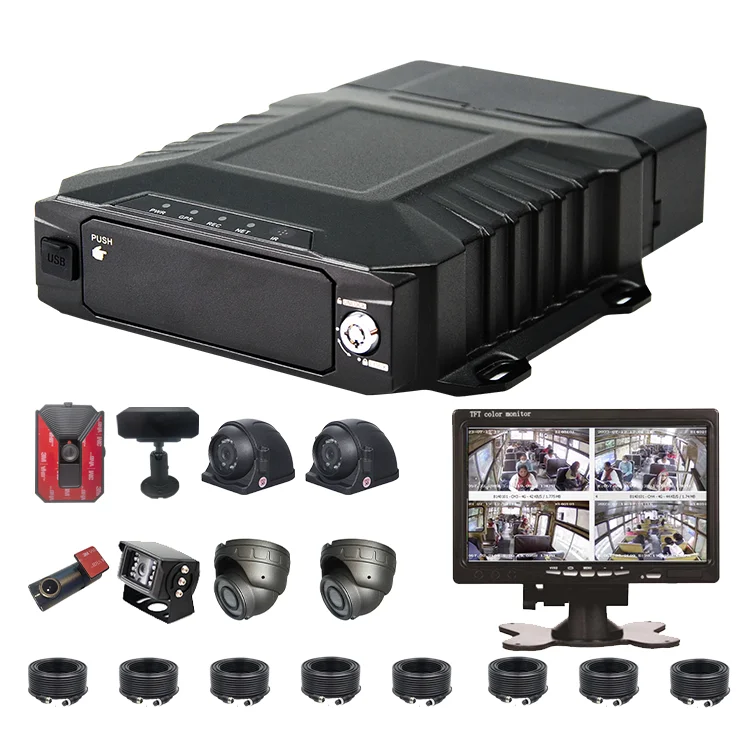
The CITOPS M52A school bus MDVR configuration is an eight-channel starting point for projects that need several road, cabin, door or exterior views. The published configuration describes 4G, GPS and Wi-Fi options, local hard-disk and SD storage, and platform functions such as remote preview and playback. Exact channels, cameras, storage and AI options must be confirmed in the quotation.
A smaller bus or a more focused camera map may use a four-channel recorder. The buyer should compare complete bills of materials, not just the recorder model or the number eight in a product title.
Approve the camera drawing, recorder, storage, antennas, cables, platform service and privacy settings only after the sample demonstrates the required result. That approved configuration becomes the reference for installation across similar buses.
NHTSA reports that 119 occupants were killed in school transportation vehicles from 2015 through 2024, and notes that children face particular risk when approaching or leaving a school bus. A video system does not replace the bus design, driver procedures, mirrors, stop-arm rules or training. Its role is to give the operator the right visibility and evidence for the defined school bus workflow.
Send CITOPS the bus model or dimensions, seating layout, fleet quantity, required road, cabin, door and exterior views, daily route hours, retention target, operating country and platform requirements. Contact CITOPS to receive a proposed camera map, sample configuration and itemized bill of materials.

Q: Does every school bus need an eight-channel MDVR?
A: No. The channel count follows the number of independent views the operator needs. A small bus with four required views may use four channels; a longer bus with road, driver, entrance, multiple cabin and exterior views may need eight or more.
Q: Where should school bus cameras be installed?
A: Common positions include the front road, driver area, entrance door, passenger cabin, rear or emergency door and selected exterior zones. The final positions depend on the bus body, seating, mirrors and purpose of each view.
Q: How long should school bus video be stored?
A: Choose retention from route hours, the time normally needed to report a complaint, contract requirements and local policy. Calculate storage using the proposed channel count and recording settings, then verify actual use on the sample bus.
Q: Should a school bus camera system record audio?
A: Only when there is a defined operational need and the operator has confirmed the applicable policy and legal requirements. The quotation and platform permissions should clearly state whether audio is enabled.
Q: Can the MDVR send live video to the control center?
A: Yes when the quoted recorder, 4G module, SIM, platform and permissions support it. Local recording and remote live view are separate functions, so confirm both in the sample test.
Q: What should be approved before the bulk school bus order?
A: Approve the camera map, recorder and channel allocation, storage, 4G and GPS options, platform roles, alarm functions, cables and brackets, privacy settings, warranty and sample results.
Product functions and specifications vary by model, market and final bill of materials. Confirm the exact recorder, cameras, storage, connectivity, software service and accessories in the quotation before purchase.
 Hot News
2026-09-16
2026-09-11
2026-09-04
2026-08-28
2026-08-14
2026-08-07

CITOPS delivers cutting-edge in-vehicle video systems with 4G GPS tracking, AI algorithms, and cloud monitoring. Trusted in 120+ countries, we offer customized MDVR solutions for enhanced fleet safety and operational efficiency.
11/F,BlockA,Delux Sci-Tech Park,No.5 Guanle Street, Longhua District,518110,Shenzhen,China.
Copyright © 2026 Shenzhen Citops Systems Co., Ltd. All rights reserved Privacy Policy
粤ICP备 14015289 号